Choosing the Right Tokyo Neighbourhood to Stay In
A comparison of Tokyo's major districts to help you choose the right base for your travel style, whether you want calm or chaos.
The Trade-Off You Have Not Considered
Pick Your Loss
Tokyo does not have a single centre. It has a dozen, each designed for a different kind of traveller, and the mistake most first timers make is trying to stay in the middle of everything. There is no middle. The trade off is not which district has better hotels. It is which failure mode you can tolerate: paying too much for a room you barely use, spending 40 minutes on a train every morning, or sleeping in an area that goes dead by 10 p.m. Every choice involves a loss. Your job is to pick the loss you can live with.
The train network is fast but it is not forgiving. Terminals are multi company hubs. Exit through the wrong gate and your transfer ticket becomes invalid, forcing you to queue at a staffed window. You will not walk between districts in any meaningful way. You will commute. Accept that and the question becomes simpler: which district fits the way you actually spend your time, not the way you imagine you will.
.jpg)
The Districts, Stripped of Hype
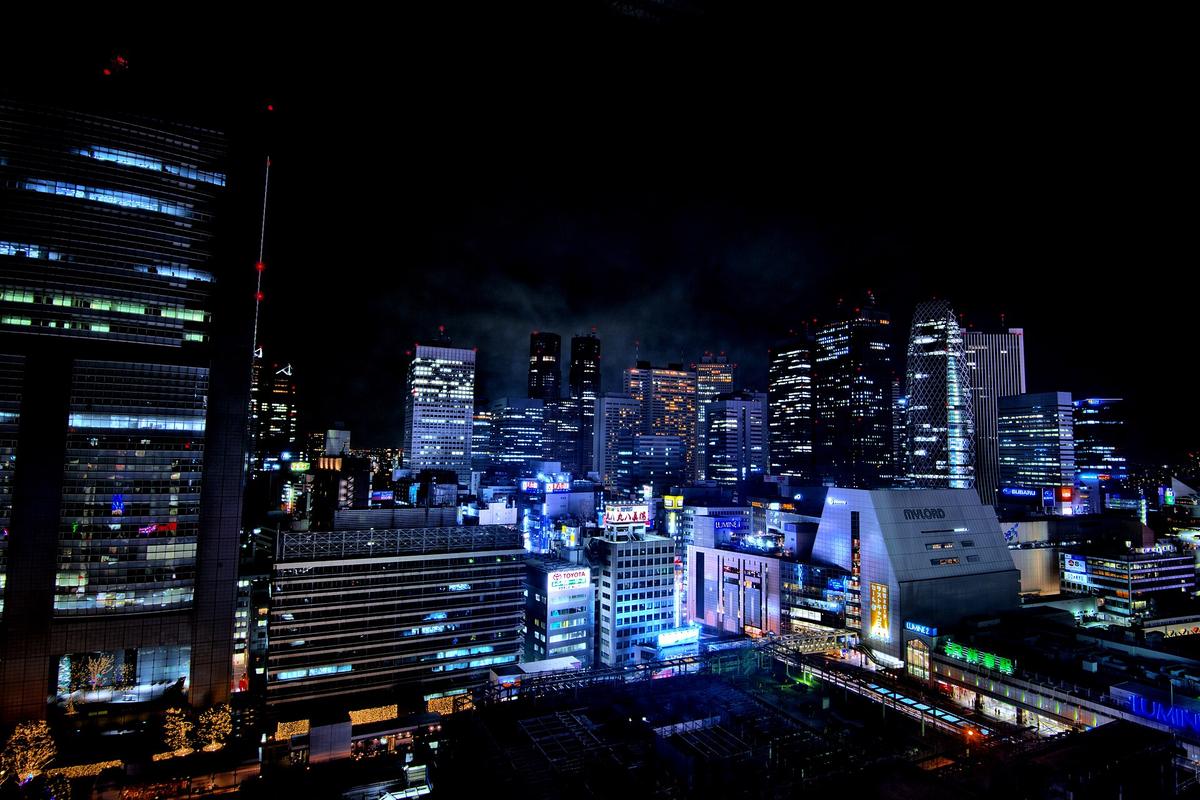
Shinjuku: The 24-Hour Hub
Shinjuku is the most practical base for a first time visitor who wants 24 hour access to bars, restaurants, and trains. JR Shinjuku connects to more lines than any other terminal in the city: the Yamanote loop, the Chuo and Sobu local and rapid lines, the Saikyo and Shonan Shinjuku lines, plus Keio, Odakyu, and three Tokyo Metro lines. You can reach almost anywhere in under 30 minutes. The downside is that nothing here is quiet. The nightly price band runs from ¥8,000 to ¥120,000, driven entirely by how close you are to the platforms and what star rating you choose. If you want silence and a traditional atmosphere, do not stay here.
Shibuya: Street Energy, Zero Calm
Shibuya is Shinjuku with better street energy and worse hotel value. The main terminal serves the Yamanote, Saikyo, Shonan Shinjuku, three Tokyo Metro lines, and two Tokyu lines. You pay a premium for the view of the scramble crossing. The nightly range is ¥9,000 to ¥100,000, and the price variance comes from room size and whether your window faces the intersection or a back alley. Late night runs until early morning. The area is unsuitable for families with young children and anyone who needs calm after dark. If your trip revolves around youth culture, shopping, and standing in the middle of the crossing for a photo, this is your base. If you want to sleep before midnight, it is not.
Ginza: Elegance Over Chaos
Ginza is for the traveller who values wide footpaths, flagship department stores, and a weekend pedestrian paradise over late night chaos. The primary stop is Tokyo Metro Ginza, with access to the Ginza, Hibiya, and Marunouchi lines, plus JR Yamanote from nearby Yurakucho and Toei Asakusa from Higashi Ginza. It is the most expensive area to stay in. The nightly price band starts at ¥15,000 and goes past ¥200,000. Late night activity runs only until 1 a.m. at most. Budget travellers and backpackers should skip this entirely. The upside is an elegant, walkable grid that feels more like a European capital than an Asian megacity. The downside is that you are paying for calm and polish, not for convenience to youth culture or budget eats.
Asakusa: The Budget Circuit
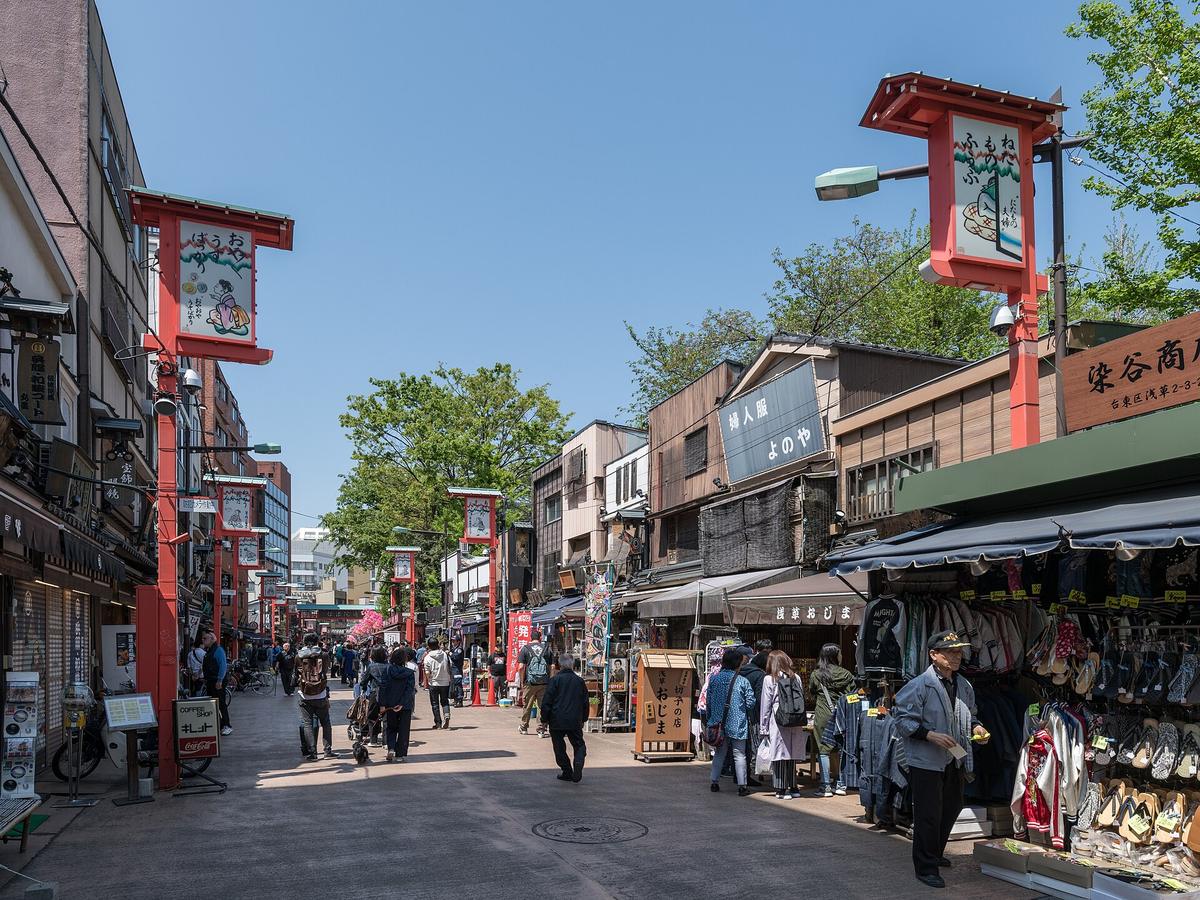
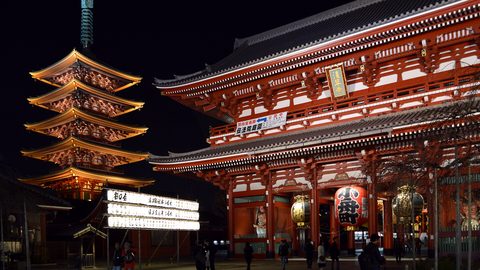
Asakusa is the cheapest option that still puts you inside the tourist circuit. The primary stop is Tobu Asakusa, with access to the Tobu Skytree line, Tokyo Metro Ginza, Toei Asakusa, and Tsukuba Express. Nightly prices run from ¥5,000 for a hostel dorm to ¥60,000 for a ryokan style room. The area feels older, slower, and more residential. Senso ji temple and Nakamise shopping street are steps away. The trade off is clear: nightlife is thin, luxury shopping is non existent, and most restaurants close by 10 p.m. If you are travelling on a tight budget or want an early start for day trips to Nikko via the Tobu Limited Express, this is a strong choice. If you want to party until 4 a.m., do not consider it.
Ueno: Museums and Narita Access
Ueno works well for museum focused travellers and anyone arriving or departing via Narita, because the Keisei Skyliner terminates here in 55 to 70 minutes. JR Ueno connects to the Yamanote, Keihin Tohoku, Tohoku, Takasaki, Utsunomiya, and Joban lines, plus two Tokyo Metro lines and Keisei. The nightly price band is ¥5,500 to ¥80,000, with variance coming from hotel class and proximity to Ameyoko market street. Late night izakaya run until midnight, but the area lacks polish. This is not for luxury travellers. The value is in access to Ueno Park, its cluster of museums, and the budget shopping strip. The failure mode is the ragged cityscape and the crowds around the exits.
Tokyo Station Area: The Logical Core
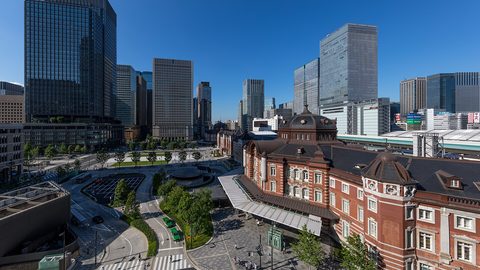
Tokyo Station Area is the most connected place in Japan. JR Tokyo serves the Yamanote, Keihin Tohoku, Chuo, Sobu, Keiyo, Tokaido, Yokosuka, and four Shinkansen lines, plus the Tokyo Metro Marunouchi line. It is also the most expensive, with nightly rates from ¥12,000 to ¥250,000 plus. The area is quiet after 11 p.m., and nightlife is limited to hotel bars and a handful of Marunouchi restaurants. This is the right base if your trip involves multiple Shinkansen departures or if you want to be inside the imperial palace precinct. It is wrong for nightlife seekers and anyone on a tight budget.
Roppongi: Expat Nights Until Dawn
Roppongi is the international nightlife district, with late night activity running until 5 a.m. The primary stop is Tokyo Metro Roppongi, served by the Hibiya and Toei Oedo lines. Nightly prices run ¥10,000 to ¥150,000, driven by hotel star rating and proximity to the club district. It is the best base for travellers who want to eat late, drink late, and are comfortable in an expat heavy environment. It is not suitable for families or anyone seeking a traditional Japanese atmosphere. The trade off is that you are isolated from the rest of the city by distance and by culture. You will spend more time on trains to reach the western hubs than you would if you stayed there.
Day Trip Districts, Not Bases
Akihabara, Shimokitazawa, Daikanyama and Nakameguro, and Kagurazaka are best treated as day trip destinations, not bases. Akihabara is for anime, electronics, and maid cafes, but the hotel stock is thin and the area is dead after 9 p.m. Shimokitazawa is for vintage clothing and live houses, but the stop has limited rail connectivity. Daikanyama and Nakameguro offer affluent calm and design boutiques but no major rail hub. Kagurazaka has cobbled alleys and French bistros but requires a bus or a 15 minute walk from Iidabashi. Stay in one of the major hubs and visit these by train.
How to Pick Based on Travel Style
If you are a solo explorer who thrives on anonymity, Shinjuku or Shibuya. You can disappear into the crowd, eat alone at a counter, and find something open at any hour. The downside is the noise and the constant crush of bodies. If you are food obsessed and planning trips around specific meals, base yourself wherever your reservation list is concentrated. A Michelin starred ramen shop in Minato Aoyama or a high end tempura omakase in Kanda is a 20 minute train from anywhere, but a depachika basement food hall at Isetan Shinjuku or Mitsukoshi Nihonbashi is walking distance only if you stay nearby. If you are a repeat visitor who has already done the big sights, consider Ueno for its museum access or the Tokyo Station area for its train connections. If you are an efficiency nerd who appreciates systems that work, the Tokyo Station area is the most logical choice. Just budget for the premium.
If you are a traveller seeking a compact, walkable old town, do not come to Tokyo. That does not exist here. If you are on a shoestring backpacker budget wanting cheap hostels and street food, Asakusa and Ueno are your options. If you find crowds and underground mazes anxiety inducing, avoid Shinjuku and Shibuya entirely. Stay in Ginza or the Tokyo Station area, where the streets have wide footpaths and the exits are legible.

The Practical Details That Matter More Than the District
Tools You Will Actually Use
Budget for a pocket WiFi rental, not an eSIM. The Japan Official Travel App provides terminal floor maps that work offline. Google Maps is essential but fails on vertical navigation in multi floor malls. You will need a rechargeable Suica or Pasmo IC card. Add it to your phone wallet. Carry your rubbish to the next convenience store because public trash cans are virtually non existent. Restaurant reservations are mandatory after the pandemic. Walk in refusals happen even when empty seats are visible. Book every meal you care about at least two weeks ahead.
Airport Transfers Decoded
Arrive at Narita or Haneda with the right ticket. From Narita, the Keisei Skyliner reaches Ueno in 55 minutes for around ¥2,570. The Narita Express reaches Tokyo, Shibuya, or Shinjuku in a similar time for around ¥3,250. From Haneda, the Keikyu Line reaches Shinagawa or Asakusa in 25 to 40 minutes for around ¥330. The Tokyo Monorail reaches Hamamatsucho for around ¥520. The cheaper option is Haneda. The faster option for central Tokyo is Haneda. If you land at Narita, stay in Ueno if you want the cheapest train ride, or Shinjuku if you want the most connections.
Day Trips and the One Rule That Governs Them
Take one day trip maximum per two nights in Tokyo. Kamakura is one hour by JR Yokosuka Line from Tokyo Station. Nikko is two hours by Tobu Limited Express from Asakusa. Kawaguchiko is two hours by highway bus from Shinjuku. Yokohama is 30 minutes by Tokyu Toyoko line from Shibuya. Kawagoe is 45 minutes by Tobu Tojo line from Ikebukuro. Each of these rewards a full day. Do not try to combine them. Do not try to do Kamakura in the morning and Nikko in the afternoon. The trains run on time but the distances do not shrink.
Your Next Move
Open a map of the Tokyo rail network. Trace your day one itinerary. If more than two of your destinations are on the Yamanote loop, stay at a stop on that loop: Shinjuku, Shibuya, Ueno, or Tokyo Station. If your trip revolves around a single attraction or restaurant cluster, stay within walking distance of that cluster and accept the commute to everything else. If you cannot decide, pick Shinjuku. It fails in predictable ways. Every other district fails in ways you will not learn until you are standing at a ticket gate with an invalid transfer and no trash can in sight.
Common Questions
Which district is best for a first time visitor to Tokyo?
Shinjuku. The terminal connects to nearly every line in the city. You can reach anywhere in 30 minutes. The trade off is noise. You will not get a quiet night without paying for a high floor room in a soundproofed hotel.
Which district is cheapest for accommodation?
Asakusa and Ueno. Both offer dorm beds from around ¥5,000 and private rooms up to ¥60,000 or ¥80,000. The trade off is that nightlife shuts down by midnight and the dining options are limited to local izakaya and tourist oriented restaurants.
Which district should I avoid if I want peace and quiet?
Shinjuku and Shibuya. Both run 24 hours. The exits spill into pedestrian mazes that stay crowded past midnight. Ginza or the Tokyo Station area are quieter, but they cost more and the last train is earlier.
How many days should I plan for Tokyo?
At least five full days. Anything less means you spend your time commuting between checklist sights without experiencing the rhythm of any single district. Pick two areas max per day. Covering Shibuya, Shinjuku, Harajuku, Asakusa, Akihabara, and Roppongi in two days is the most common mistake.
When is the worst time to visit for accommodation prices and crowds?
Golden Week from late April to early May brings domestic gridlock and fully booked hotels. Mid August has oppressive humidity. New Year from December 29 to January 3 closes many independent restaurants and shops. Cherry blossom season in late March to early April and autumn foliage in late November are peak seasons with premium rates and packed parks. Book four months ahead if you go during those windows.
Read next
-
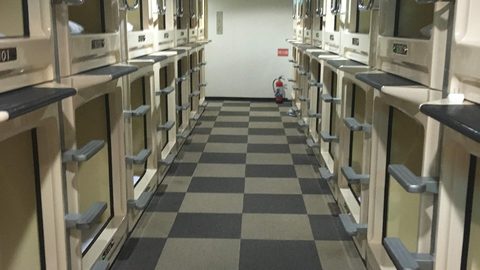
 Tokyo Hotels by Type and Budget from Capsules to Luxury
Tokyo hotels organised by type and price band, from efficient capsule pods to full-service luxury towers, to help you book the right room.
Tokyo Hotels by Type and Budget from Capsules to Luxury
Tokyo hotels organised by type and price band, from efficient capsule pods to full-service luxury towers, to help you book the right room.
-
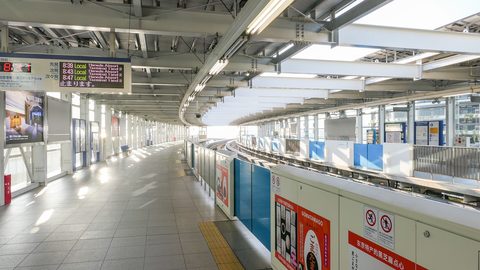 Narita or Haneda for Tokyo and What That Airport Choice Costs You
Narita or Haneda for Tokyo: compare door-to-district time, transfer cost, and what the wrong airport choice eats from your trip.
Narita or Haneda for Tokyo and What That Airport Choice Costs You
Narita or Haneda for Tokyo: compare door-to-district time, transfer cost, and what the wrong airport choice eats from your trip.
-
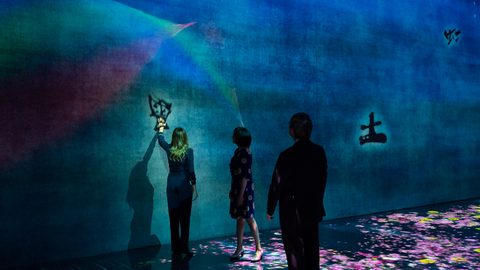 Things to Do in Tokyo That Are Worth Your Limited Days
A curated list of Tokyo's highest-impact sights and experiences, from immersive art to quiet backstreets, to help you prioritise your days.
Things to Do in Tokyo That Are Worth Your Limited Days
A curated list of Tokyo's highest-impact sights and experiences, from immersive art to quiet backstreets, to help you prioritise your days.
-
 Best Time to Visit Tokyo Month by Month Tradeoffs
A month-by-month guide to visiting Tokyo, laying out the trade-off between weather, crowds, price, and what's actually open.
Best Time to Visit Tokyo Month by Month Tradeoffs
A month-by-month guide to visiting Tokyo, laying out the trade-off between weather, crowds, price, and what's actually open.
-
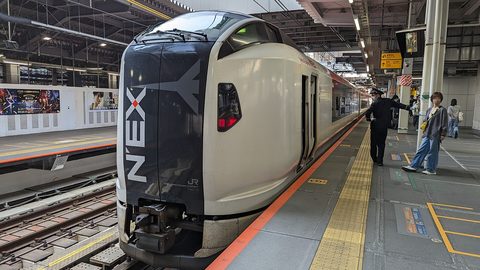 Getting Around Tokyo by Train Airport Transfers and IC Cards
A practical guide to Tokyo's rail network, covering airport transfers, IC cards, and how to avoid the station navigation mistakes that eat your day.
Getting Around Tokyo by Train Airport Transfers and IC Cards
A practical guide to Tokyo's rail network, covering airport transfers, IC cards, and how to avoid the station navigation mistakes that eat your day.
-
 Tokyo Itinerary That Clusters Districts Instead of Chasing Sights
A 5-day Tokyo plan that clusters two districts per day and deliberately skips the checklist to preserve neighbourhood rhythm.
Tokyo Itinerary That Clusters Districts Instead of Chasing Sights
A 5-day Tokyo plan that clusters two districts per day and deliberately skips the checklist to preserve neighbourhood rhythm.
-
 Senso-ji
 is free and never closes, but the experience at 6am with empty Nakamise stalls is nothing like the 11am crush under Kaminarimon. Here is when to go and what you get at each hour.
Senso-ji
Senso-ji is free and never closes, but the experience at 6am with empty Nakamise stalls is nothing like the 11am crush under Kaminarimon. Here is when to go and what you get at each hour.
-
 Meiji Jingu
The Meiji Jingu visit changes completely depending on which torii gate you enter. One drops you from Harajuku noise into sudden forest, the other builds quiet slowly from Yoyogi.
Meiji Jingu
The Meiji Jingu visit changes completely depending on which torii gate you enter. One drops you from Harajuku noise into sudden forest, the other builds quiet slowly from Yoyogi.
-
 teamLab
 Borderless and Planets are two different Tokyo venues with separate booking systems. Borderless tickets at Azabudai Hills sell in timed slots and the maze has no fixed route.
teamLab
teamLab Borderless and Planets are two different Tokyo venues with separate booking systems. Borderless tickets at Azabudai Hills sell in timed slots and the maze has no fixed route.