How to Navigate Tokyo's Rail Network Without Getting Lost
A practical guide to Tokyo's rail network, covering airport transfers, IC cards, and how to avoid the station navigation mistakes that eat your day.
How to Navigate Tokyo’s Rail Network Without Getting Lost
Getting off the plane at Narita or Haneda is the easy part. The hard part is the moment you stand in a station concourse with three rail operators, 50 signs in two languages, and no clear idea which ticket buys you a seat to your hotel. Here is the answer: you need a Suica or Pasmo IC card on your phone before you touch a ticket machine, and you need to know which airport train matches where you are sleeping.
Two airports feed Tokyo. Narita is 60 kilometers east. Haneda is 15 kilometers south. Your choice of connection depends entirely on which district your hotel is in, not which airport is closest. Haneda is faster and cheaper. Narita handles most international long haul flights. Budget 90 minutes from landing to hotel lobby at either airport. Add a buffer if you land between 21:00 and 23:00, when last trains tighten the schedule.
Airport Transfers: Narita and Haneda
From Narita: Three Speeds, Three Prices
The fastest route into Tokyo is the Keisei Skyliner. It runs from Narita Terminal 1 to Nippori in 36 minutes and costs ¥2,570. Every seat is reserved. The last departure from Terminal 1 is 22:30. From Nippori you change to the JR Yamanote Line to reach Shinjuku, Shibuya, or Tokyo. Total time to your hotel: roughly 70 minutes.The Narita Express (N'EX) takes 53 minutes to Tokyo and costs ¥3,070 for a non-reserved seat or ¥3,600 for a reserved one. The advantage is direct service to Tokyo, Shinjuku, and Shibuya without a change. The last departure from Terminal 1 to Tokyo is 21:44. If your hotel is in Shibuya or Shinjuku, the N'EX eliminates one train change.
The third option is the Keisei Main Line limited express at ¥1,050 to Nippori in about 70 minutes. No reservation, no frills. The last train leaves at 23:00. This is the budget fallback when the Skyliner has stopped running or you want to save ¥1,520. The trade-off is a slower ride on a commuter train that stops at every stop.
The Airport Limousine Bus costs ¥1,300 to Tokyo and runs until 23:05. The bus takes 80 to 110 minutes depending on traffic. If your hotel sits directly on a bus route or you are travelling with heavy luggage, the bus beats the train for convenience. Traffic after 22:00 is light, so the bus often runs faster than its daytime timetable.
From Haneda: Cheap And Fast
Haneda is the better arrival if you have the choice. The Keikyu Airport Line costs ¥330 to Shinagawa in 11 minutes on the Airport Express. From Shinagawa you catch the JR Yamanote Line to any central district. The last Keikyu departure from Terminal 3 to Shinagawa is 00:05. This is the cheapest and fastest airport rail connection in any major world city.The Tokyo Monorail costs ¥520 to Hamamatsucho in 13 minutes on the Haneda Express. Last departure is 00:02. The monorail connects to the JR Yamanote Line at Hamamatsucho. It is marginally slower and more expensive than the Keikyu Line, so only use it if your hotel is on the eastern side of the Yamanote loop near Hamamatsucho or Tokyo.
After the last train departs, take a taxi. The flagfall is ¥500 for the first 1.096 kilometres, then ¥100 per 255 metres. From Haneda to central Tokyo expect ¥8,000 to ¥12,000. From Narita expect ¥22,000 to ¥28,000. A fixed-price night bus does not exist, so budget for the taxi or spend the night at a 24-hour karaoke box where overnight rates run ¥1,000 to ¥2,500 per person.
Why You Need an IC Card and How it Fails
A Suica or Pasmo IC card eliminates ticket machine decisions. You tap in, you tap out, and the system calculates the fare. Both cards work on JR East, Tokyo Metro, Toei Subway, private railways, monorails, and buses across the city. Add one to your phone wallet before you leave home. Do not buy a paper ticket unless your phone battery is dead.
The failure case is the multi-company hub. Shinjuku serves JR East, Odakyu, Keio, Tokyo Metro, and Toei Subway across more than 200 exits. If you tap through a JR gate into the complex and then exit through a Tokyo Metro gate without a transfer ticket, the system charges two separate base fares. The inter-company connection discount of ¥70 to ¥90 off the combined fare only applies if you use the correct transfer gate. Walk through the wrong gate and you forfeit the discount. If you leave the complex entirely, you pay two full base fares.
The solution is simple: stay inside the complex when switching operators. Look for the orange "Transfer" signs. Do not go through a ticket gate unless you are exiting to street level. Google Maps tells you which platform number to walk to, but the vertical navigation inside multi-floor malls is unreliable. Download the Japan Official Travel App for station floor maps that work offline.
For buses, tap the reader at the front door when boarding and tap again at the rear door when exiting. The system calculates distance-based fares. On flat-fare routes within the 23 wards, tap only on entry. The flat fare is ¥210.
The Main Rail Operators and How to Read the Map
Your Core Network
Three operators run the trains you will use most. JR East runs the Yamanote Line, the green loop that circles central Tokyo connecting Shinjuku, Shibuya, Harajuku, Tokyo, and Ueno. The base fare within central Tokyo is ¥180 on IC card. Tokyo Metro runs nine underground lines including the Ginza Line and the Marunouchi Line. Toei Subway runs four lines including the Oedo Line and the Asakusa Line. Base fare for both subway operators is also ¥180 on IC card.The Yamanote Line is your spine. If you can reach a Yamanote platform from your hotel, you can reach every major district in 30 minutes or less by staying on the loop. The last full circuit departure from Tokyo is 00:34 for the inner loop and 00:37 for the outer loop. After that, trains on each line stop between 00:00 and 00:30 depending on the line. Check the last train time for your specific route before dinner.
When You Miss The Last Train
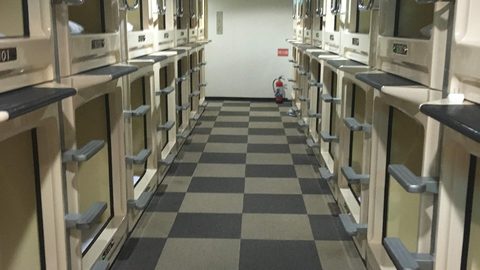
Your options: a taxi (¥500 flagfall plus a 20 percent surcharge between 22:00 and 05:00), a capsule hotel (overnight rates from ¥3,000 to ¥5,000), a manga cafe (flat-rate night packs from ¥1,500 to ¥3,000), or a 24-hour karaoke box (¥1,000 to ¥2,500 per person per night). App-based dispatch via Uber, GO, or DiDi works at any hour at major taxi stands.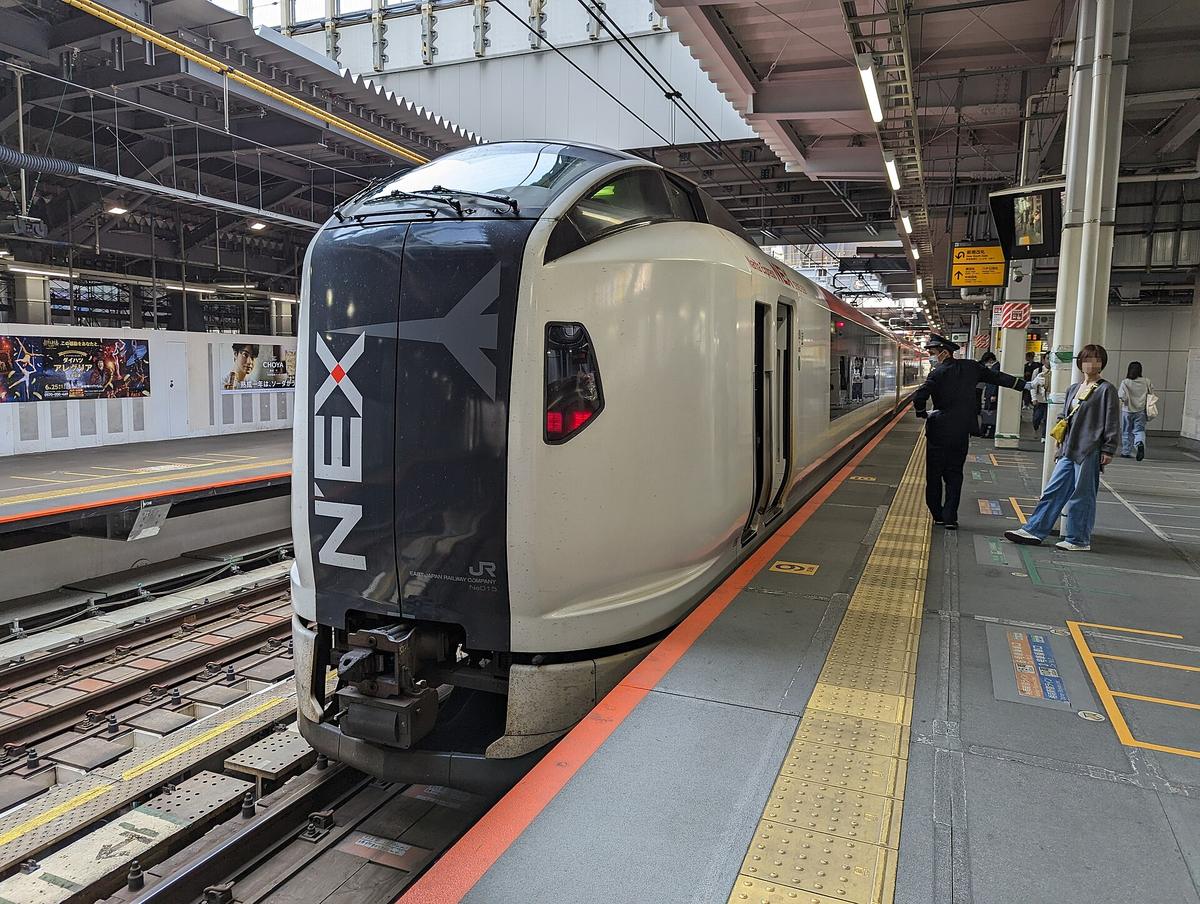


Station Navigation: the Three Hardest Hubs
Shinjuku
Shinjuku handles 3.5 million passengers daily. It has more than 200 exits. The complex is not one building but five separate structures for JR, Odakyu, Keio, Tokyo Metro, and Toei Subway, connected by long underground passages. The most common mistake is exiting to street level at the wrong side and ending up at a taxi stand that adds 15 minutes of walking to your destination. Pin the exact exit number in Google Maps before you arrive. If you are meeting someone, name the exit letter, not the station name.Shibuya
Shibuya has been under continuous construction since 2013. Platform locations have shifted multiple times. The hub serves JR East, Tokyu, Keio Inokashira, and Tokyo Metro. The scramble crossing exit is obvious, but the east-west passage through the complex changes every few months. Follow the overhead signage, not your memory from a previous visit. The new Shibuya Scramble Square building connects directly to the complex on multiple floors, which adds vertical confusion.Tokyo
Tokyo splits into the Marunouchi side and the Yaesu side. The two sides are separated by non-through concourses. If you enter from the Marunouchi exit and need to reach the Yaesu side for a Shinkansen platform, you must walk through the central passage. Allow 10 minutes for that walk alone. The hub serves five Shinkansen platforms, ten JR conventional lines, and one Tokyo Metro line. The Metro is a separate underground level.Common Questions
Should I buy a Suica or a Pasmo card?
Either works on everything: JR East, Tokyo Metro, Toei Subway, private railways, monorails, and buses. Suica is JR East and Pasmo is the subway consortium. They are interchangeable. Add one to your phone wallet before travel for instant setup.
What happens if I exit through the wrong gate at a multi-company station?
You pay two separate base fares and lose the ¥70 to ¥90 inter-company transfer discount. Stay inside the complex and use the Transfer signs to switch operators. Do not exit to street level until you reach your final destination.
Can I use my IC card on the Narita Express or Keisei Skyliner?
No. Both require a separate ticket. You can buy it at the airport counter or a ticket machine. Your IC card covers the local fare at the destination if you are transferring.
What is the cheapest way from Narita to central Tokyo?
The Keisei Main Line limited express at ¥1,050 to Nippori. It takes 70 minutes. Last departure is 23:00. No reservation needed. From Nippori, use your IC card on the JR Yamanote Line to reach any central district.
Read next
-
 Tokyo Hotels by Type and Budget from Capsules to Luxury
Tokyo hotels organised by type and price band, from efficient capsule pods to full-service luxury towers, to help you book the right room.
Tokyo Hotels by Type and Budget from Capsules to Luxury
Tokyo hotels organised by type and price band, from efficient capsule pods to full-service luxury towers, to help you book the right room.
-
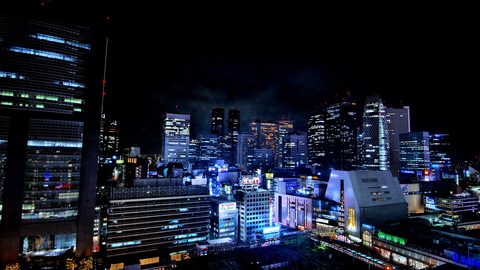 Where to Stay in Tokyo by District and Travel Style
A comparison of Tokyo's major districts to help you choose the right base for your travel style, whether you want calm or chaos.
Where to Stay in Tokyo by District and Travel Style
A comparison of Tokyo's major districts to help you choose the right base for your travel style, whether you want calm or chaos.
-
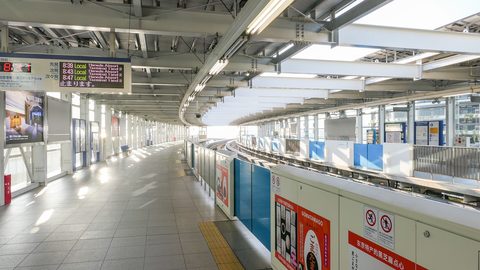 Narita or Haneda for Tokyo and What That Airport Choice Costs You
Narita or Haneda for Tokyo: compare door-to-district time, transfer cost, and what the wrong airport choice eats from your trip.
Narita or Haneda for Tokyo and What That Airport Choice Costs You
Narita or Haneda for Tokyo: compare door-to-district time, transfer cost, and what the wrong airport choice eats from your trip.
-
 Things to Do in Tokyo That Are Worth Your Limited Days
A curated list of Tokyo's highest-impact sights and experiences, from immersive art to quiet backstreets, to help you prioritise your days.
Things to Do in Tokyo That Are Worth Your Limited Days
A curated list of Tokyo's highest-impact sights and experiences, from immersive art to quiet backstreets, to help you prioritise your days.
-
 Best Time to Visit Tokyo Month by Month Tradeoffs
A month-by-month guide to visiting Tokyo, laying out the trade-off between weather, crowds, price, and what's actually open.
Best Time to Visit Tokyo Month by Month Tradeoffs
A month-by-month guide to visiting Tokyo, laying out the trade-off between weather, crowds, price, and what's actually open.
-
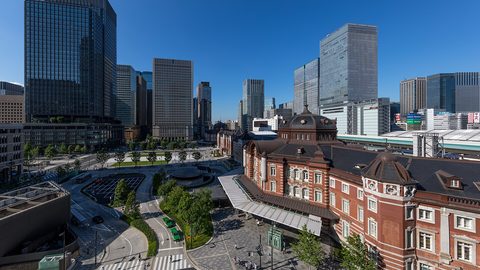 Tokyo Itinerary That Clusters Districts Instead of Chasing Sights
A 5-day Tokyo plan that clusters two districts per day and deliberately skips the checklist to preserve neighbourhood rhythm.
Tokyo Itinerary That Clusters Districts Instead of Chasing Sights
A 5-day Tokyo plan that clusters two districts per day and deliberately skips the checklist to preserve neighbourhood rhythm.
-
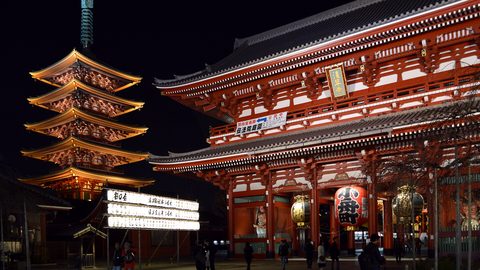 Senso-ji
 is free and never closes, but the experience at 6am with empty Nakamise stalls is nothing like the 11am crush under Kaminarimon. Here is when to go and what you get at each hour.
Senso-ji
Senso-ji is free and never closes, but the experience at 6am with empty Nakamise stalls is nothing like the 11am crush under Kaminarimon. Here is when to go and what you get at each hour.
-
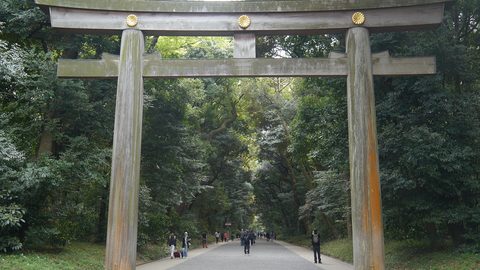 Meiji Jingu
The Meiji Jingu visit changes completely depending on which torii gate you enter. One drops you from Harajuku noise into sudden forest, the other builds quiet slowly from Yoyogi.
Meiji Jingu
The Meiji Jingu visit changes completely depending on which torii gate you enter. One drops you from Harajuku noise into sudden forest, the other builds quiet slowly from Yoyogi.
-
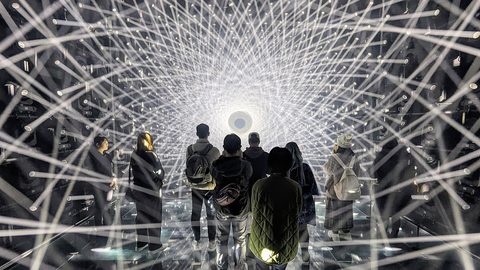 teamLab
 Borderless and Planets are two different Tokyo venues with separate booking systems. Borderless tickets at Azabudai Hills sell in timed slots and the maze has no fixed route.
teamLab
teamLab Borderless and Planets are two different Tokyo venues with separate booking systems. Borderless tickets at Azabudai Hills sell in timed slots and the maze has no fixed route.