Which Torii Gate You Enter Through Shapes the Whole Meiji Jingu Visit
The Meiji Jingu visit changes completely depending on which torii gate you enter. One drops you from Harajuku noise into sudden forest, the other builds quiet slowly from Yoyogi.
Which Torii Gate You Enter Through Shapes the Whole Meiji Jingu Visit
You step off the train at Harajuku and the crowd shoves you through the ticket gate. Takeshita-dori is 200 meters east, a corridor of crepe stalls, loudspeaker pop music, and teenagers queuing for character merch. Turn west instead. Within 30 seconds the noise cuts off. The gravel path begins. The canopy closes overhead. You have just entered Meiji Jingu through the South Gate, and the transition is so abrupt it feels like a teleport.
Meiji Jingu is not a building you visit. It is a forest you walk through. The main shrine structures sit at the end of a 10-minute gravel path, but the walk is the point. The entrance you choose determines whether you arrive from chaos or from calm. The Harajuku gate drops you straight from the city's loudest teenage strip into sudden, quiet canopy. The Yoyogi gate sends you through a longer wooded approach from a residential edge. One is a shock. The other is a slow exhale. Both work, but they work for different visits.
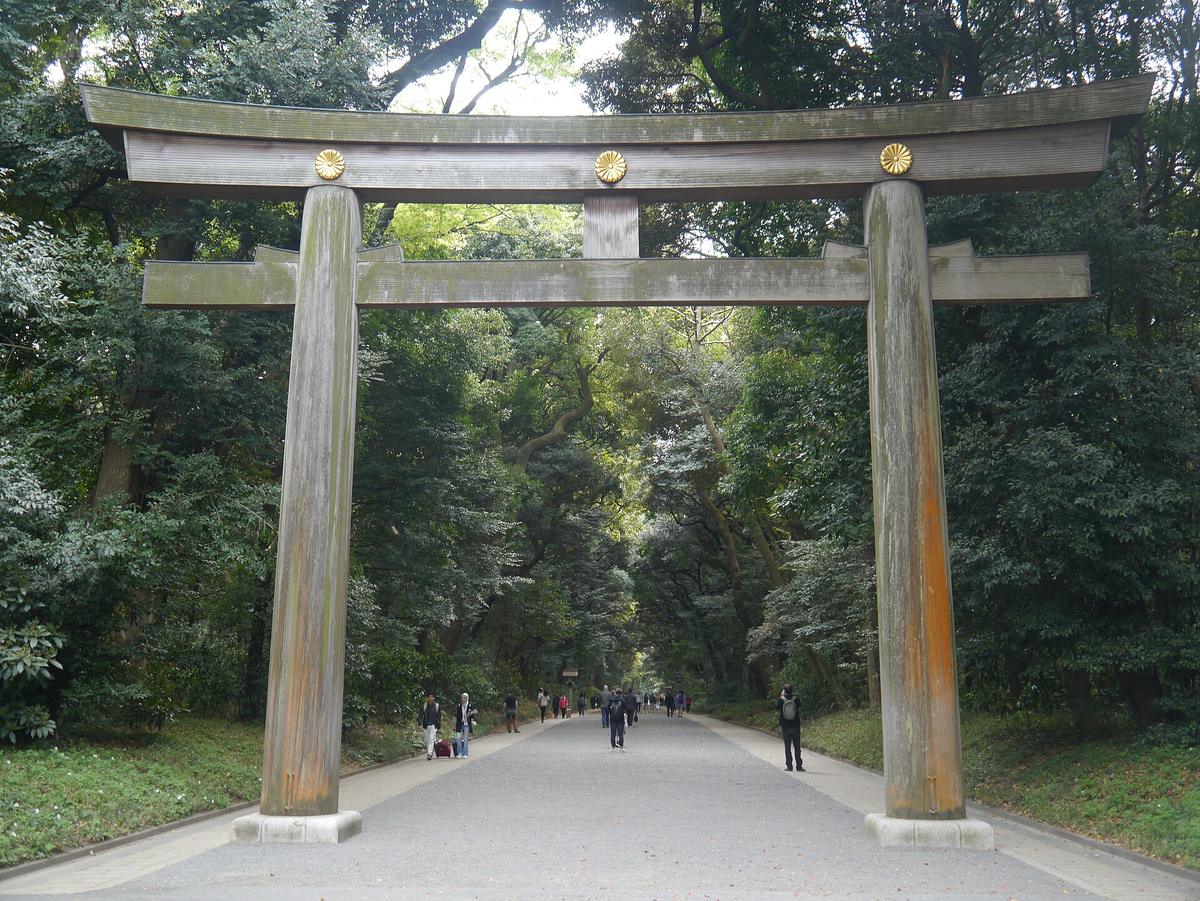

- Main Entrance: South Gate (Minami Shinmon), nearest station Harajuku (JR Yamanote Line, west exit)
- Alternate Entrance: North Gate (Kita Shinmon), nearest station Yoyogi (JR Yamanote Line / Toei Oedo Line)
- Opening Hours: Sunrise to sunset. Earliest around 05:00 in summer, latest around 06:40 in winter. Closes at sunset, earliest around 16:40 in winter, latest around 19:00 in summer.
- Inner Garden (Meiji Jingu Gyoen): 500 JPY. Seasonal highlight: iris bloom in June.
- Treasure Museum (Meiji Jingu Museum): 1,000 JPY. Open 10:00 to 16:30 (last entry 16:00). Closed Thursdays (or following day if Thursday is a national holiday).
- Combined Ticket: Not available. Garden and museum are separate purchases.
- Yoyogi Park Adjacency: Main entrance is about 100 meters from the South Gate. Free entry.
The Harajuku Entrance: Shock Therapy
Use the South Gate from Harajuku and you get the version of Meiji Jingu that most tourists experience. The path is straight, wide, and direct. You pass under the first massive torii and the city sounds stop. The forest is thick enough that you cannot see buildings. The gravel crunch underfoot becomes the only noise. It takes about 10 minutes to reach the main worship hall, and the whole walk feels like a decompression chamber between Tokyo's loudest district and a Shinto prayer.
Choose this entrance when you want contrast. When you want to feel the city fall away. When you are already in Harajuku and you need a reset before you head back into the crowds. The mistake most visitors make is treating the shrine as a quick stop between shopping and lunch. They walk the path, snap a photo at the main hall, and leave. That misses the point.
What to Do at the South Gate Approach
Walk slowly. Stop at the sake and wine barrel displays near the entrance. The barrels are donations from across Japan and France, a visual note on Meiji Jingu's connection to both tradition and international diplomacy. Continue to the main hall, bow twice, clap twice, bow once. Then step back and watch the ceremonies. Weddings happen here. Blessings happen here. The shrine is active, not a museum. Stay for 15 minutes just observing.
After the main hall, walk to the east side of the grounds toward the Meiji Jingu Gyoen, the inner garden. It costs 500 JPY. Most visitors skip it. That is a mistake during iris season in June, when the garden's irises bloom in a controlled, deliberate display. The garden is a quiet loop of paths, a pond, and seasonal plantings. It takes about 30 minutes to walk. Outside iris season, it is still pleasant but not essential.
The Yoyogi Entrance: the Slow Approach
Yoyogi is quieter than Harajuku. The North Gate entrance from Yoyogi puts you on a longer, more winding path through the forest. The approach builds anticipation. You are not dropped into the shrine. You earn it.
Pick this entrance if you are a repeat visitor, if you are staying in the Yoyogi or Sendagaya area, or if you want a meditative walk rather than a sightseeing hit. The path from the North Gate to the main hall is less crowded, even on weekends. You pass smaller shrines and a second torii before you reach the main complex. The forest here feels older and deeper, partly because the path curves and the canopy stays dense longer.
If you enter from Yoyogi, you also have an easy exit to Yoyogi Park afterward. The park's main entrance is about 100 meters from the South Gate, so you can walk through the shrine grounds, exit at the South Gate, and cross into the park. Yoyogi Park is free, spacious, and full of locals on weekends. It is a better post-shrine activity than heading straight back into Harajuku.
Which Entrance Wins
There is no single correct choice. The Harajuku entrance is better for first-timers who want the contrast. The Yoyogi entrance is better for anyone who has seen the shrine before or who wants a quieter walk. If you have time, enter from Yoyogi, walk the full grounds, exit at the South Gate, and spend 30 minutes in Yoyogi Park. That route gives you the slow build, the shrine itself, and the park decompression in one loop. It takes about 90 minutes total, plus time in the inner garden if you choose to add it.
The Inner Garden and the Museum: Paid Additions Worth Your Time
Two paid additions sit inside the grounds. No combined ticket exists. Each is a separate purchase.
The Meiji Jingu Gyoen (inner garden) costs 500 JPY. Its peak moment is June, when the iris garden blooms. The irises are planted in a wet basin, and the display is precise and intentional. Outside June, the garden is a pleasant but unremarkable Japanese landscape garden. If you are short on time and it is not iris season, skip it. If you are here in June, pay the 500 JPY and walk the loop.
The Meiji Jingu Museum costs 1,000 JPY. It holds artifacts related to Emperor Meiji and Empress Shoken, including the carriage used in their funeral procession. It is a small museum, well curated, but it appeals mostly to history enthusiasts. The museum closes at 16:30, last entry at 16:00, and it is closed on Thursdays (or the following day if Thursday is a national holiday). Verify the closure before you go. If you have no interest in Meiji-era imperial history, skip the museum and spend the 1,000 JPY on a meal instead.
Who Should Skip Meiji Jingu Entirely
If you have only one day in Tokyo, skip Meiji Jingu. The shrine is a 90-minute minimum commitment, and the first day in Tokyo is better spent on a single district like Shibuya or Shinjuku where you can feel the rhythm. If you find crowds anxiety-inducing, arrive at the Yoyogi entrance by 08:00 before the tour groups arrive. If you are on a shoestring budget, the shrine grounds are free, so the only cost is your time. But the inner garden and museum are paid, and neither is essential for a first visit.
Common Questions
Which entrance to Meiji Jingu is less crowded?
The North Gate from Yoyogi. The path is longer and less direct, so most tourists use the South Gate from Harajuku. If you want a quiet approach, enter from Yoyogi.
How long does it take to walk from the South Gate to the main shrine?
About 10 minutes on the gravel path at a normal walking pace. Add another 10 minutes if you stop at the barrel displays or pause to take photos.
Is the Meiji Jingu inner garden worth 500 JPY?
Only during iris season in June. Outside that month, the garden is a standard Japanese landscape garden. If you have seen one, you have seen most of them. Save the 500 JPY for something else.
Can I visit Meiji Jingu and Harajuku in the same morning?
Yes. Enter from the South Gate, walk the shrine grounds, exit at the same gate, and walk 200 meters to Takeshita-dori. The contrast is extreme, but that is exactly why the combination works. Just do not rush the shrine.
What time should I arrive to avoid crowds?
Arrive at the North Gate by 08:00. The shrine opens at sunrise, but the first tour buses arrive around 09:30. Between 08:00 and 09:00, the grounds are nearly empty.
Read next
-
 Tokyo Hotels by Type and Budget from Capsules to Luxury
Tokyo hotels organised by type and price band, from efficient capsule pods to full-service luxury towers, to help you book the right room.
Tokyo Hotels by Type and Budget from Capsules to Luxury
Tokyo hotels organised by type and price band, from efficient capsule pods to full-service luxury towers, to help you book the right room.
-
 Where to Stay in Tokyo by District and Travel Style
A comparison of Tokyo's major districts to help you choose the right base for your travel style, whether you want calm or chaos.
Where to Stay in Tokyo by District and Travel Style
A comparison of Tokyo's major districts to help you choose the right base for your travel style, whether you want calm or chaos.
-
 Narita or Haneda for Tokyo and What That Airport Choice Costs You
Narita or Haneda for Tokyo: compare door-to-district time, transfer cost, and what the wrong airport choice eats from your trip.
Narita or Haneda for Tokyo and What That Airport Choice Costs You
Narita or Haneda for Tokyo: compare door-to-district time, transfer cost, and what the wrong airport choice eats from your trip.
-
 Things to Do in Tokyo That Are Worth Your Limited Days
A curated list of Tokyo's highest-impact sights and experiences, from immersive art to quiet backstreets, to help you prioritise your days.
Things to Do in Tokyo That Are Worth Your Limited Days
A curated list of Tokyo's highest-impact sights and experiences, from immersive art to quiet backstreets, to help you prioritise your days.
-
 Best Time to Visit Tokyo Month by Month Tradeoffs
A month-by-month guide to visiting Tokyo, laying out the trade-off between weather, crowds, price, and what's actually open.
Best Time to Visit Tokyo Month by Month Tradeoffs
A month-by-month guide to visiting Tokyo, laying out the trade-off between weather, crowds, price, and what's actually open.
-
 Getting Around Tokyo by Train Airport Transfers and IC Cards
A practical guide to Tokyo's rail network, covering airport transfers, IC cards, and how to avoid the station navigation mistakes that eat your day.
Getting Around Tokyo by Train Airport Transfers and IC Cards
A practical guide to Tokyo's rail network, covering airport transfers, IC cards, and how to avoid the station navigation mistakes that eat your day.
-
 Senso-ji
 is free and never closes, but the experience at 6am with empty Nakamise stalls is nothing like the 11am crush under Kaminarimon. Here is when to go and what you get at each hour.
Senso-ji
Senso-ji is free and never closes, but the experience at 6am with empty Nakamise stalls is nothing like the 11am crush under Kaminarimon. Here is when to go and what you get at each hour.
-
 teamLab
 Borderless and Planets are two different Tokyo venues with separate booking systems. Borderless tickets at Azabudai Hills sell in timed slots and the maze has no fixed route.
teamLab
teamLab Borderless and Planets are two different Tokyo venues with separate booking systems. Borderless tickets at Azabudai Hills sell in timed slots and the maze has no fixed route.
-
 Shibuya Sky
 at sunset is a booked-out Tokyo experience for a reason, but the Metropolitan Government Building and Bunkyo Civic Center offer free high-rise views worth comparing.
Shibuya Sky
Shibuya Sky at sunset is a booked-out Tokyo experience for a reason, but the Metropolitan Government Building and Bunkyo Civic Center offer free high-rise views worth comparing.