China, Without the Four Obstacles That Trip People Up
China rewards travellers who plan apps, payments, trains, and tickets before arrival. Start with the four obstacles and the pages that solve them.
- Flag
-

- ISO code
- CN
- Population
- 1,410,000,000
- Currency
- CNY
- Timezone
- Asia/Shanghai
- Dial code
- +86
China Travel Guide: Four Obstacles You Can Solve Before You Leave
Four things trip up first time visitors to China: language friction, internet filtering, cashless payments, and physical scale. Every other problem flows from these. Solve them before you fly and the trip becomes straightforward. Ignore them and you will spend your holiday in train stations trying to explain yourself with hand gestures.
China is not a spontaneous destination. It is a fast, app driven country where your phone is your wallet, your map, your ticket, and your translator. The reward for pre planning is a trip that works smoothly. The penalty for not planning is a trip that does not.

- Minimum trip length: 7 days
- Typical first trip length: 10, 14 days
- First trip corridor: Beijing, Xi'an, Shanghai by high-speed rail
- Peak seasons: April, May and September, October
- Avoid windows: Chinese New Year (dates vary), October 1, 7 National Day, May 1, 5
- Main gateway airports: Beijing Capital (PEK), Beijing Daxing (PKX), Shanghai Pudong (PVG), Shanghai Hongqiao (SHA), Guangzhou Baiyun (CAN)
- Visa required: Yes, L tourist visa for first trip
Obstacle One: Language Friction
English is rare outside hotel lobbies, major airports, and a handful of tourist restaurants. Menus, metro signs, and station announcements are Chinese first. You need a translation app with offline Chinese installed before you arrive. Pleco and Google Translate both work. Point your phone camera at a menu to get a rough translation. Learn the numbers from one to ten. Learn the phrase for "no sugar" if you drink coffee.
Hotel staff in licensed properties will speak some English. Do not expect this from taxi drivers, street vendors, or anyone at a train station. Write down your destination in Chinese characters and show it to drivers. Have your hotel write the name of your next station or attraction on paper before you leave each morning.
Obstacle Two: Internet Filtering
Install Your VPN Before You Fly
Google, Gmail, WhatsApp, Instagram, Facebook, YouTube, and X/Twitter do not work in China without a VPN. Hotel Wi-Fi is behind the firewall. A local SIM or eSIM from China Mobile, China Unicom, or China Telecom will also be behind the firewall. The solution is to install a VPN on your phone and laptop before you leave. Test it before you go. Some VPNs are blocked inside the country. Carry a second option.
Set Up Your Apps And SIM
An alternative is an international eSIM that routes data outside the firewall. These work for basic internet access but can be slow for video. Either way, set up Alipay, WeChat, a VPN, and your translation app before you arrive. Do not wait until you land. You will need these apps to function. Didi, the ride hailing app, works in English and is the way to call a taxi, not a street hail.
Obstacle Three: Cashless Payments
Cash is often refused. Many vendors, from street food stalls to metro ticket machines, accept only QR code payments through Alipay or WeChat Pay. International credit cards work only at international hotels and large malls. UnionPay cards work almost everywhere, but most visitors do not have one.
Link a foreign Visa, Mastercard, JCB, or Diners card to Alipay and WeChat Pay before you travel. Single transactions under 200 CNY are fee free. Above that, expect a 3% fee. The annual cumulative fee free limit is 60,000 CNY. This covers a two week trip comfortably. Carry some cash for emergencies, about 500 CNY in small notes, but do not count on using it.
Obstacle Four: Physical Scale
Beijing to Shanghai by high speed rail is 4 hours 18 minutes. That is fast, but it is still half a day. Xi'an sits between them: 4 hours 10 minutes from Beijing, over 6 hours from Shanghai by direct train. The common mistake is trying to see Beijing, Xi'an, Shanghai, Guilin, and Chengdu in two weeks. That means a transit day every second day. You spend your trip in stations and on trains, not at the sights.
Stick To The Corridor
For a first trip, stick to the Beijing Xi'an Shanghai corridor. That is three cities. Ten days minimum. Fourteen is better. You can add Hangzhou or Suzhou as day trips from Shanghai: 45 minutes and 25 minutes by high speed rail respectively. Save Sichuan, Yunnan, Guangxi, and the rest for a second trip. This is not a limitation. It is the difference between seeing three things well and seeing seven things badly.

.jpg)
| City | Character | High-Speed Rail Time From Beijing | Minimum Days |
|---|---|---|---|
| Beijing | Political capital, imperial monuments, grid layout, wide avenues | Start here | 3–4 |
| Xi'an | Ancient capital, walled city, Terracotta Army | 4 h 10 min | 2–3 |
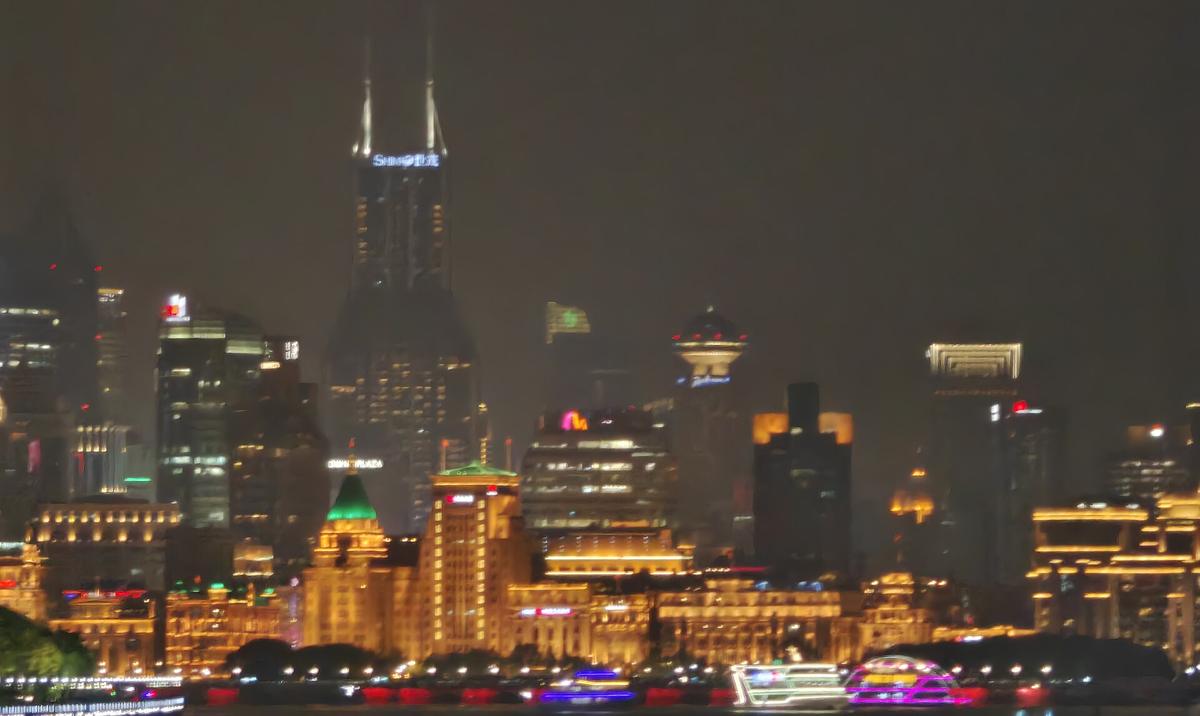
| Shanghai | Financial center, colonial-era architecture, riverfront skyline | 4 h 18 min | 3–4 |
Booking Your Spine, Then Branching Out
Book The Big Tickets First
Before you do anything, book the Forbidden City. It has a daily cap of 80,000 visitors, requires a booking 1 to 7 days ahead, and is closed on Monday. The Terracotta Army is open daily but hits its 65,000 cap on peak days. Book that ahead too if you travel in April, May, September, or October. High speed rail tickets open 15 days in advance. Your passport is required to collect them at the station or to scan at the gate for e-tickets.
Then Branch Out
These four obstacles connect to four practical pages on this site. Your coverage for language friction, internet, payments, and transport lives on the eSIM page, the money page, the getting around page, and the visa page. Visit those pages next. They tell you exactly which app to install, which SIM to buy, how high speed rail booking works with a foreign passport, and which visa you need with your nationality.
Once you have that spine built, branch out. The best time to visit page tells you which month to go. The budget page tells you what things cost. The safety page covers scams, crime, and health. The city guides handle individual cities. Each page answers one question. You read them in order. That is how this site works.
Who This Trip Suits and Who it Does Not
This trip suits first time Asia travellers who want the big sights and are willing to plan ahead. It suits food focused travellers, history enthusiasts, and urban explorers who like megacities. It suits independent travellers willing to install apps, carry their passport everywhere, and queue.
It does not suit spontaneous backpackers on a shoestring without a smartphone. It does not suit anyone who needs Western style comfort everywhere, though first tier hotels have it. It does not suit people who want quiet, uncrowded nature or beach escapes. It does not suit anyone unwilling to deal with censorship, queues, and Chinese only signage. If that describes you, pick a different destination. If it does not, prep the apps, book the train tickets, and go.
Frequently Asked Questions
Do I need a visa for China?
Yes, most foreign nationals need an L tourist visa for a first trip. Standard validity is 30 days single entry. Visa free transit stays of 24 to 240 hours exist at some ports depending on nationality, but those rules belong to the visa page.
How much cash should I carry?
Carry about 500 CNY in small notes for emergencies. Do not rely on cash for daily spending. Most vendors are cashless and many refuse notes entirely. Set up Alipay and WeChat Pay with a foreign card before you fly.
Will my phone work in China?
Your phone will work with a local SIM or eSIM from China Mobile, China Unicom, or China Telecom. Buy it at the airport. Your existing international data plan may work but will be expensive and still sits behind the firewall. Install a VPN before you arrive.
Can I use Google Maps?
Google Maps is unreliable in China without a VPN and has coordinate offset issues. Apple Maps works because it uses local data. Amap (Gaode Maps) is the dominant local app but has a Chinese only interface. Download offline maps of each city before you go.
How do I book high speed rail tickets?
Tickets open 15 days in advance. You need your passport to collect paper tickets or to scan at the gate for e-tickets. The official platform is 12306. Foreigners can register but the process is cumbersome. Many visitors use a third party booking service that handles the passport registration. Either way, arrive at the station 30 minutes early.
What is the electrical plug situation?
China uses Type A (two flat parallel pins), Type C (two round pins), and Type I (three flat pins in a triangle). Voltage is 220 V at 50 Hz. Bring a universal adapter. Full detail is on the plugs page.
Is tap water safe to drink?
No. Tap water is not potable. Bottled water costs 2 to 5 CNY for 500 ml. Hotels provide bottled water in rooms. Carry a reusable bottle and buy water at convenience stores.
Read next
-
 China Visa-Free Transit and Unilateral Entry Rules Explained
China visa-free transit and unilateral entry rules change often. Here is how they work now, who qualifies, and what breaks a stay.
China Visa-Free Transit and Unilateral Entry Rules Explained
China visa-free transit and unilateral entry rules change often. Here is how they work now, who qualifies, and what breaks a stay.
-
 Cash to Cashless in China What First-Timers Must Set Up
China runs on Alipay and WeChat Pay, and cash is often refused. Set up both with a foreign card before you land or risk being stranded.
Cash to Cashless in China What First-Timers Must Set Up
China runs on Alipay and WeChat Pay, and cash is often refused. Set up both with a foreign card before you land or risk being stranded.
-
 Will Google, WhatsApp and Maps Actually Work on a China eSIM
A China eSIM solves data but not the firewall. Here is what actually works for Google, WhatsApp and Maps and why a VPN still matters.
Will Google, WhatsApp and Maps Actually Work on a China eSIM
A China eSIM solves data but not the firewall. Here is what actually works for Google, WhatsApp and Maps and why a VPN still matters.
-
 How to Book China High-Speed Rail as a Foreigner
China high-speed rail is the best way between cities, but booking and boarding as a foreigner means passports, Chinese signs and buffer time.
How to Book China High-Speed Rail as a Foreigner
China high-speed rail is the best way between cities, but booking and boarding as a foreigner means passports, Chinese signs and buffer time.
-
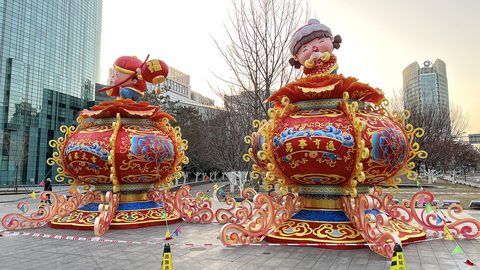 China Public Holidays and What They Do to Travel
China's national holidays trigger massive domestic travel, sold-out trains, and packed sights. Here's when they fall and how to plan around them.
China Public Holidays and What They Do to Travel
China's national holidays trigger massive domestic travel, sold-out trains, and packed sights. Here's when they fall and how to plan around them.
-
 China Plugs Voltage and What to Actually Pack
China runs on 220V with three possible plug types. Here's exactly what adapter to pack and which devices need a voltage converter.
China Plugs Voltage and What to Actually Pack
China runs on 220V with three possible plug types. Here's exactly what adapter to pack and which devices need a voltage converter.
-
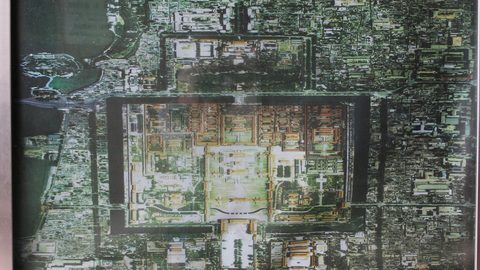 Beijing
 rewards history obsessives and solo travellers who can handle crowds, distances and friction. Here is how to decide if it fits you.
Beijing
Beijing rewards history obsessives and solo travellers who can handle crowds, distances and friction. Here is how to decide if it fits you.
-
 Fifth Freedom Flights Are the Award Sweet Spot Nobody Searches For
Fifth-freedom flights let you fly a foreign airline between two other countries, and they often have award seats when the airline's own hub routes are sold out.
Fifth Freedom Flights Are the Award Sweet Spot Nobody Searches For
Fifth-freedom flights let you fly a foreign airline between two other countries, and they often have award seats when the airline's own hub routes are sold out.
-
 Every Way Into an Airport Lounge and What Each One Actually Costs You