The Tokyo Skytree Tembo Galleria Is a Real Decision, Not an Automatic Upgrade
Tokyo Skytree sells two observation decks at two prices. The upper Tembo Galleria costs extra and on a cloudy day the sloping glass corridor adds nothing the lower deck does not already show.
Tokyo Skytree Tembo Galleria is a Real Decision, Not an Automatic Upgrade
The Tokyo Skytree has two observation decks at two separate prices, and the question of whether to pay for the upper one is not a no-brainer. Here is the answer: buy the lower Tembo Deck ticket only, then decide on the day whether to add the Galleria. The extra JPY 1,000 gets you a sloping glass corridor called Skywalk 451 at 451.2 metres, a quieter crowd, and a ceiling 2 metres lower than the deck below. On a clear winter morning you might see Mount Fuji to the west. On a humid summer afternoon you will see nothing but a 5 to 10 kilometre haze at a price that buys a full meal in Asakusa. The Galleria is worth the money only if you are a first-time visitor with clear skies and time to spare, or a repeat visitor who wants to avoid the lower deck queues. Skip it if you are on a budget, if the sky is grey, or if you have already been to the free observation floor at the Tokyo Metropolitan Government Building in Shinjuku.
- Tembo Deck Height: 350 m (floors 340, 345, 350)
- Tembo Galleria Height: 450 m (floors 445, 450, Skywalk 451 at 451.2 m)
- Same-Day Adult Tickets: Tembo Deck JPY 2,100; Galleria upgrade JPY 1,000; Combined JPY 3,100
- Advance Adult Tickets: Tembo Deck JPY 1,800; Galleria upgrade JPY 900; Combined JPY 2,700
- Opening Hours: 10:00 to 21:00. Last admission to Tembo Deck 20:00; last admission to Tembo Galleria 20:30.
- Ticket Purchase: Advance timed-entry tickets available from 30 days before. Same-day tickets at the 4th floor counter, subject to availability.
- Best Visibility: December to February, early morning 10:00 to 11:00. Mount Fuji visible roughly 80% of winter days, 20% of summer days.
- Worst Visibility: June and July, late afternoon 16:00 to 18:00. Typical summer range 5 to 10 km.
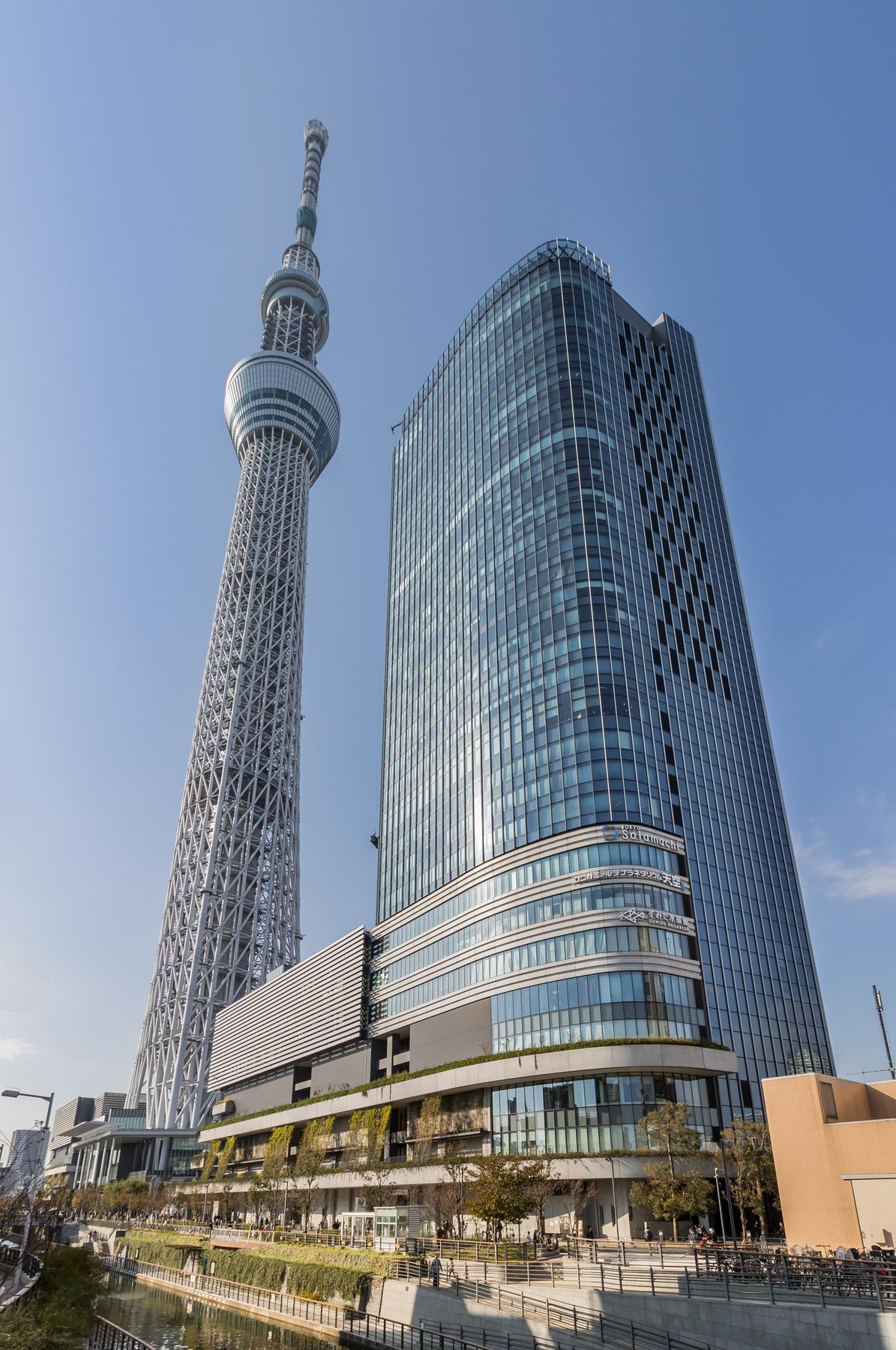
- Solamachi Complex: 31 above-ground floors, about 300 shops and restaurants. Aquarium, planetarium, cinema, free rooftop garden on 8F.
- Nearest Stations: Tokyo Skytree Station (Tobu Skytree Line, 50 m). Oshiage Station (Tobu, Metro Hanzomon, Toei Asakusa, Keisei lines, 100 m).
What You Actually Get for the Extra JPY 1,000
The lower Tembo Deck at 350 metres contains three floors of wraparound glass, a cafe at 340 metres, glass floor panels on floor 340 that let you look straight down, and an official shop on floor 345. It holds up to 2,000 people and has a 7 metre ceiling. Most visitors stop here.
What The 100 Metre Difference Changes
The upper Galleria at 450 metres is a tighter space at roughly 1,000 square metres with a 5 metre ceiling, two cafe tables near the windows, and the main attraction: a spiral glass walkway that climbs from floor 445 to floor 450. That ramp is Skywalk 451. At its peak you stand at 451.2 metres, the highest publicly accessible point in the building.
One hundred metres of elevation is not nothing, but it does not transform the view. From 350 metres you already see the Tokyo sprawl, the Sumida River bending south toward Tokyo Bay, and the green smear of the Imperial Palace East Gardens. From 450 metres you see the same sprawl from a steeper angle. The buildings look smaller, the horizon pushes further out. On a clear day you can confirm that Tokyo is flat and endless in every direction. The real difference is the corridor itself. The Galleria is narrower, quieter, and lit differently. The ramp forces a walking path that keeps you moving along the glass rather than parking you at a window. Some visitors find it disorienting. Others find it calm.
How The Weather Decides For You
The Skytree is a 634 metre tower designed for broadcasting, not exclusively for views. Its height means it lives inside the weather. December through February is the reliable window. Arrive early, 10:00 to 11:00, for the clearest air. Mount Fuji sits west and appears on roughly four out of five winter days. June and July are the worst. Humidity and haze reduce visibility to 5 or 10 kilometres. The skyline at 350 metres already looks soft, and the extra 100 metres adds nothing but fuzz. The 16:00 to 18:00 slot in any season is the least reliable. Check the live webcam or a clear-sky forecast before you commit to the upper deck. If you cannot see the far edge of the city from ground level, the Galleria will not show it to you.
Compared To The Free Options
Tokyo Tower sits closer to the central districts, which makes its view feel more urban and less abstract. You see the skyscrapers of Roppongi and Minato at a recognisable scale. The Skytree sits in Oshiage, a working-class Sumida neighbourhood, and shows you Tokyo as a horizontal system of rail corridors, rivers, and low rooftops. The free observation deck at the Tokyo Metropolitan Government Building in Shinjuku gives you a comparable view at no cost and with shorter queues. If you are on a budget, that building beats both Skytree decks. The Skytree's advantage is the exclusive Galleria, and that advantage lasts only as long as the air is clear.

How to Get in and How to Do it Well
Book a timed-entry ticket for the Tembo Deck only, before you arrive. The pre-purchase price is JPY 1,800 for adults, saving JPY 300 over the same-day price. Tickets go on sale 30 days before your visit date. Enter through the 4th floor of the Solamachi complex, the same floor as the ticket counter and the pre-booked ticket gate. The elevator carries 40 people and takes about 50 seconds to reach the Tembo Deck. Once you are on the lower deck, decide in person whether to add the Galleria at the top of the elevator bank. The addition costs JPY 900 pre-booked or JPY 1,000 on the day, and the elevator from the Tembo Deck to the Galleria takes about 30 seconds. Last admission to the Galleria is 20:30, thirty minutes after the lower deck closes.
The Mistake Most Visitors Make
Buying the combined ticket before you know the weather. The pre-booked combined ticket costs JPY 2,700, only JPY 300 less than the same-day combined ticket, and it locks you in. If the haze is thick, you have paid for a view you cannot use. Buy the Tembo Deck pre-booked ticket for JPY 1,800 and decide to skip the Galleria, and you save JPY 900 to JPY 1,300 over the combined option. If you decide to add the Galleria, you pay JPY 900 or JPY 1,000 on site and end up at roughly the same total as the pre-booked combined ticket. The only risk is that the Galleria sells out on a peak day. That is rare. The Skytree sees about 4.4 million annual visitors across both decks, and the Galleria has a separate capacity. On the busiest cherry blossom weekends in late March, arrive by 10:00. On an ordinary Tuesday, buy the single deck and decide at the elevator.
What To Do With The Rest Of Your Time In The Tower
The Solamachi complex at the base is the real time-sink. It contains about 300 shops and restaurants across 31 floors, a Sumida Aquarium on floors 5 and 6, a Konica Minolta planetarium on floor 7, a free rooftop garden on floor 8, and a 10-screen cinema. The restaurant floors on 6, 7, 30, and 31 stay open until 23:00, two hours after the observation decks close. The 4th floor souvenir and character goods floor is crowded at midday but manageable after 19:00. The 5th floor Japan Experience Zone stocks traditional crafts at souvenir prices. Skip the 3rd floor food court unless you need a quick starch hit. The 2nd floor Maruetsu Petit supermarket is useful for picnic supplies. The 1st floor has coin lockers, a 7-Eleven, a foreign currency exchange, and a post office open until 19:00.
The Verdict: Who Should Pay and Who Should Skip
Pay for the Galleria if you have never been to Tokyo before and the forecast shows clear skies above 20 kilometres visibility. Do it in the 10:00 to 11:00 window on a December or January morning when Mount Fuji has an 80% chance of appearing. Pay for it if you are a repeat visitor who has already seen the Tembo Deck and wants the novelty of the glass ramp without the lower deck crowds. Skip the Galleria if you are on a shoestring budget. The JPY 1,000 addition covers a filling bowl of abura soba or a tonkatsu set meal at a mid-range restaurant. Skip it if the sky is grey, hazy, or overcast. A 100 metre altitude gain does not punch through cloud cover. Skip it if you are short on time. The lower deck plus the Solamachi complex already fills two hours. Adding the Galleria queue, the elevator ride, and the ramp walk adds another 30 to 45 minutes for a view that is 100 metres higher but not 100 metres better.
Skip the Skytree entirely if you want a compact walkable old town or a cheap street food crawl. That is not Sumida. The Skytree sits on the eastern edge of the historic shitamachi district, Asakusa is a 15 minute walk west, and the Senso-ji temple grounds are your better bet for a low-budget afternoon. Skip the Skytree if crowds and underground mazes make you anxious. The station connections at Oshiage involve four different rail companies and a vertical climb through a multi-floor shopping mall. The tower itself holds 2,000 people on the observation decks. Go to the free Tokyo Metropolitan Government Building instead. Go to the rooftop of the Mori Building in Roppongi instead. Go to the Meguro Sky Garden instead. None of those require a ticket queue.

Common Questions
Can I buy a Tembo Deck ticket and add the Galleria later?
Yes. Buy the Tembo Deck pre-booked ticket for JPY 1,800, ride up, and if the view is clear, purchase the Galleria addition at the elevator bank inside the deck. The addition costs JPY 900 pre-booked or JPY 1,000 same-day. You are not required to commit at the ground floor ticket counter.
How far in advance should I book Skytree tickets?
Timed-entry tickets go on sale 30 days before your visit date. For peak seasons like cherry blossom week in late March or autumn foliage in late November, book as soon as the window opens. For ordinary weekdays, booking three to five days ahead is sufficient.
Is there a best time of day for the Galleria?
Yes. 10:00 to 11:00 in winter. December through February offers the clearest air, with Mount Fuji visible roughly 80% of mornings. Avoid 16:00 to 18:00 in any season, when haze and glare are worst. Summer afternoons reduce visibility to 5 to 10 kilometres.
What is the difference between Tokyo Skytree Station and Oshiage Station?
Tokyo Skytree Station is on the Tobu Skytree Line and sits about 50 metres from the tower. Oshiage Station serves the Tobu Skytree Line plus the Tokyo Metro Hanzomon Line, Toei Asakusa Line, and Keisei Oshiage Line, and sits about 100 metres away. Use Oshiage if you are coming from central Tokyo on the subway; use Tokyo Skytree Station if you are riding the Tobu line from Asakusa or further north.
Can I bring a tripod or a drone to the observation decks?
No. Tripods are prohibited on both observation decks. Drones are prohibited anywhere on the Skytree grounds. Photography with handheld cameras and phones is allowed. Service dogs are permitted. Strollers are allowed.
Read next
-
 Tokyo Hotels by Type and Budget from Capsules to Luxury
Tokyo hotels organised by type and price band, from efficient capsule pods to full-service luxury towers, to help you book the right room.
Tokyo Hotels by Type and Budget from Capsules to Luxury
Tokyo hotels organised by type and price band, from efficient capsule pods to full-service luxury towers, to help you book the right room.
-
 Where to Stay in Tokyo by District and Travel Style
A comparison of Tokyo's major districts to help you choose the right base for your travel style, whether you want calm or chaos.
Where to Stay in Tokyo by District and Travel Style
A comparison of Tokyo's major districts to help you choose the right base for your travel style, whether you want calm or chaos.
-
 Narita or Haneda for Tokyo and What That Airport Choice Costs You
Narita or Haneda for Tokyo: compare door-to-district time, transfer cost, and what the wrong airport choice eats from your trip.
Narita or Haneda for Tokyo and What That Airport Choice Costs You
Narita or Haneda for Tokyo: compare door-to-district time, transfer cost, and what the wrong airport choice eats from your trip.
-
 Things to Do in Tokyo That Are Worth Your Limited Days
A curated list of Tokyo's highest-impact sights and experiences, from immersive art to quiet backstreets, to help you prioritise your days.
Things to Do in Tokyo That Are Worth Your Limited Days
A curated list of Tokyo's highest-impact sights and experiences, from immersive art to quiet backstreets, to help you prioritise your days.
-
 Best Time to Visit Tokyo Month by Month Tradeoffs
A month-by-month guide to visiting Tokyo, laying out the trade-off between weather, crowds, price, and what's actually open.
Best Time to Visit Tokyo Month by Month Tradeoffs
A month-by-month guide to visiting Tokyo, laying out the trade-off between weather, crowds, price, and what's actually open.
-
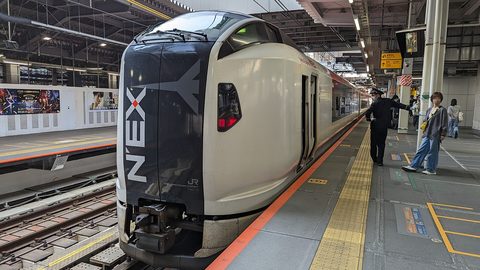 Getting Around Tokyo by Train Airport Transfers and IC Cards
A practical guide to Tokyo's rail network, covering airport transfers, IC cards, and how to avoid the station navigation mistakes that eat your day.
Getting Around Tokyo by Train Airport Transfers and IC Cards
A practical guide to Tokyo's rail network, covering airport transfers, IC cards, and how to avoid the station navigation mistakes that eat your day.
-
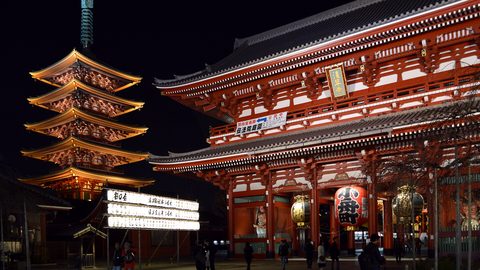 Senso-ji
 is free and never closes, but the experience at 6am with empty Nakamise stalls is nothing like the 11am crush under Kaminarimon. Here is when to go and what you get at each hour.
Senso-ji
Senso-ji is free and never closes, but the experience at 6am with empty Nakamise stalls is nothing like the 11am crush under Kaminarimon. Here is when to go and what you get at each hour.
-
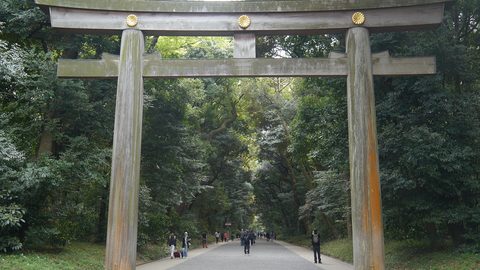 Meiji Jingu
The Meiji Jingu visit changes completely depending on which torii gate you enter. One drops you from Harajuku noise into sudden forest, the other builds quiet slowly from Yoyogi.
Meiji Jingu
The Meiji Jingu visit changes completely depending on which torii gate you enter. One drops you from Harajuku noise into sudden forest, the other builds quiet slowly from Yoyogi.
-
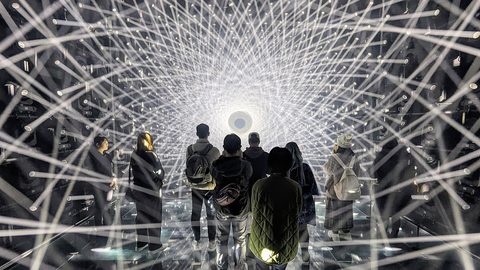 teamLab
 Borderless and Planets are two different Tokyo venues with separate booking systems. Borderless tickets at Azabudai Hills sell in timed slots and the maze has no fixed route.
teamLab
teamLab Borderless and Planets are two different Tokyo venues with separate booking systems. Borderless tickets at Azabudai Hills sell in timed slots and the maze has no fixed route.