Taking the Bus from Haneda Airport to Tokyo Station Instead of the Train
Haneda to Tokyo Station Bus When the Train is Faster and the Bus Still Wins
The bus from Haneda to Tokyo Station costs ¥1,300 and takes 45 to 60 minutes. The train costs ¥490 and takes 30 to 40 minutes. On paper the bus loses. But it is the better choice for anyone arriving with two large suitcases, anyone landing after 22:00, and anyone staying on the Yaesu side of Tokyo Station. The reason is not speed. It is friction.
The Keikyu Line to Shinagawa plus the Yamanote Line to Tokyo Station is cheap and fast. The transfer at Shinagawa has no elevator to the JR platform in the direction you need. You haul your bags up stairs, through a narrow passage, and into a train with no dedicated luggage space. At peak hours you block the aisle and everyone hates you. The bus eliminates that transfer entirely. The driver loads your bags into the hold. You sit down and do not move until you arrive at street level outside the Yaesu South Exit.
When the Bus Beats the Train
You Have Large Luggage
The bus allows two checked bags per passenger with total dimensions under 200 cm and weight under 30 kg per piece. No one inspects your bags. The driver loads them. You do not lift anything. The train has no luggage racks. On the Keikyu and Yamanote lines you keep your suitcase between your knees or block the doorway. If you are carrying a hard-shell case, a second bag, or anything that does not fit on your lap, the bus is the correct choice.
You Arrive Late
The last bus from Haneda to Tokyo Station departs around 23:30. If your flight lands at 22:00 and you clear customs by 22:45, you have a 45-minute window to catch it. The train runs later, but the Yamanote Line after 23:00 is unpredictable. Service thins out. The luggage problem remains. The taxi costs ¥7,000 to ¥9,000 and takes 30 to 60 minutes depending on traffic. The bus at ¥1,300 is a middle option that works when the train is stressful and the taxi is too expensive.
Your Hotel Is On The Yaesu Side
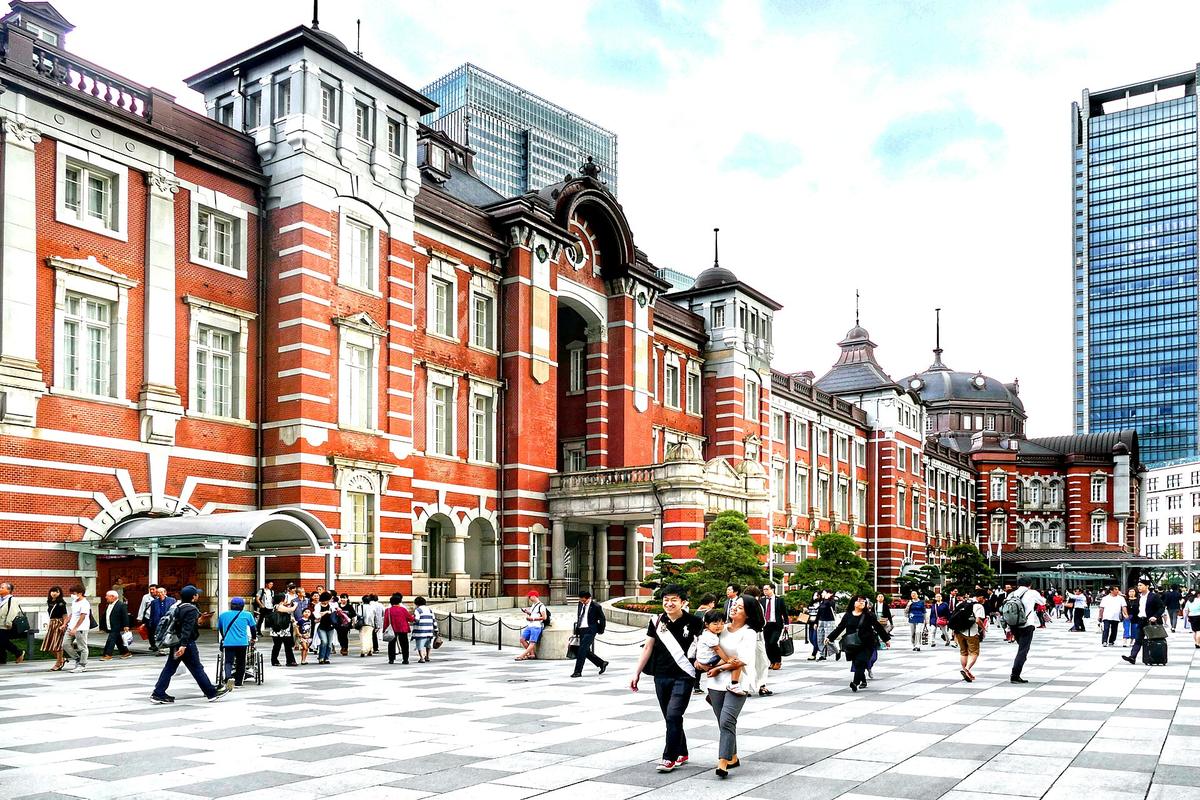
Tokyo Station has two sides. The Marunouchi side faces the Imperial Palace. The Yaesu side faces the business district and the Shinkansen gates. The bus stops at the Yaesu South Exit at street level. You walk a short distance to the Yaesu Underground Central Gate for Shinkansen connections, or slightly farther to the Yaesu North Gate. If your hotel is within a five-block radius of the Yaesu exit, the bus drops you closer than any train. The train arrives on the Marunouchi side, and you walk through the station or go outside and around. That adds time and forces you through the station's warren of exits.
You Are Taking The Shinkansen
The bus drops you a short walk from the Yaesu Underground Central Gate, the transfer point for Shinkansen lines. You do not enter the main station hall. You do not find the correct elevator. You walk from the bus bay to the Shinkansen gate directly. If you are connecting from a Haneda flight to a bullet train, the bus is the simplest transfer in Tokyo.
When the Bus is the Wrong Choice
Rush Hour and Holiday Gridlock
Do not take the bus during weekday rush hours. The journey time jumps to 70 to 100 minutes between 07:00 and 09:30 and again between 17:00 and 19:00. The train stays at 30 to 40 minutes because road traffic does not affect it. Do not take the bus during Golden Week, Obon, or New Year, when holiday traffic extends the trip to 80 or even 120 minutes. Do not take the bus if you are traveling alone with a single backpack. The train is faster, cheaper, and you have no luggage problem.
Fixed Schedule, No Mercy for Delays
The bus runs on a fixed timetable. It does not adjust for flight delays. If your plane lands late, your bus ticket remains valid for a later departure if space is available, but you cannot reserve a specific time without an online reservation. The bus operates on a first come basis. If the bus fills up, you wait for the next one. Departures are spaced 15 to 30 minutes apart depending on the time of day.
.jpg)

How to Take the Bus from Haneda to Tokyo Station
Find Your Stop and Board
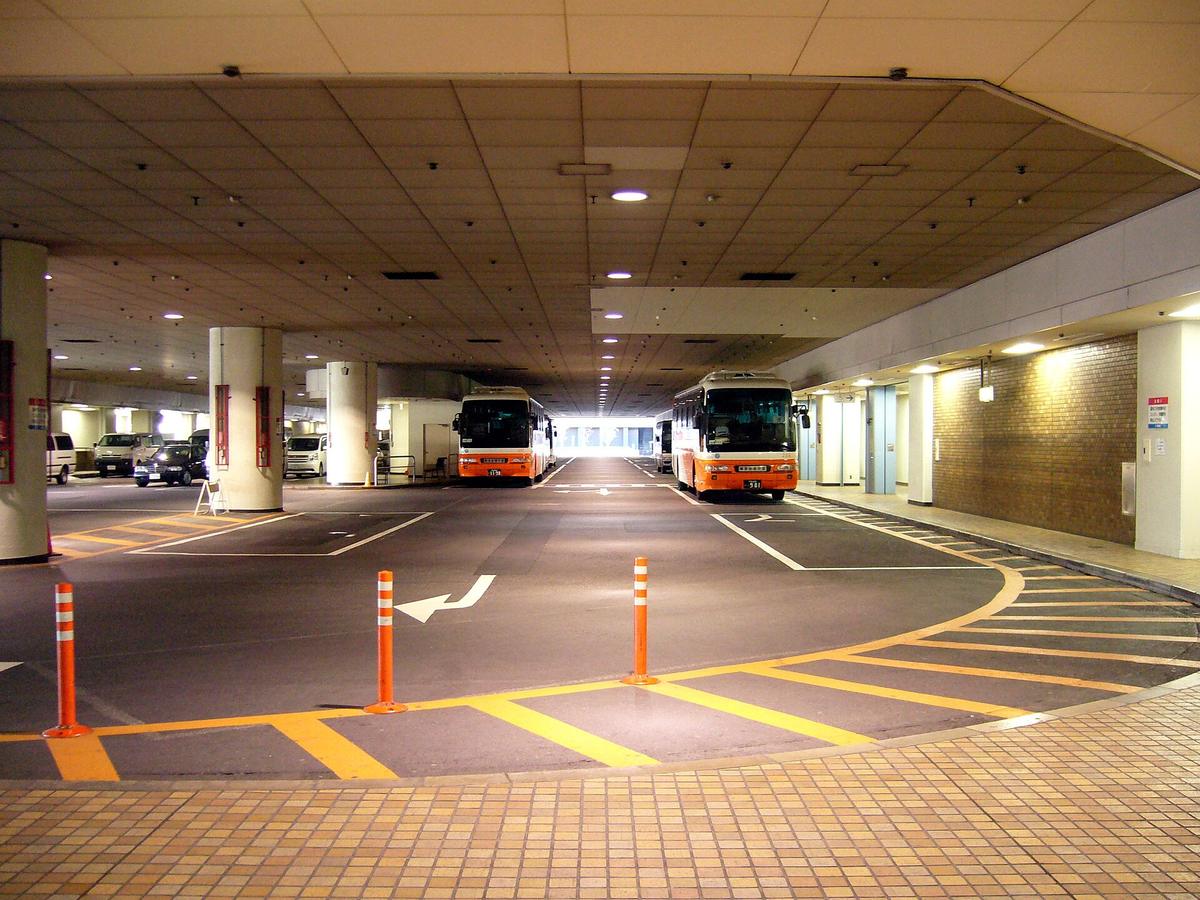
Exit arrivals at Terminal 3 and go to Bus Stop No. 5 on the first floor. At Terminals 1 and 2, use Bus Stop No. 6. The bus picks up in order: Terminal 3, then Terminal 2, then Terminal 1, then Tokyo Station. If you board at Terminal 3, the bus will stop at the other two terminals before leaving the airport. That adds 10 to 15 minutes. Factor that into your timing.
Buying Your Ticket
Buy your ticket from the multilingual machine at the bus stop, at the service counter in the arrivals hall, or pay with a Suica or PASMO IC card on board. You can also reserve a seat online in advance. This is recommended during peak travel periods. The reservation secures your seat but is not mandatory. The bus does not sell return tickets.
First and Last Departures
The first bus from Haneda to Tokyo Station departs around 05:30. The last bus departs around 23:30. The first bus from Tokyo Station to Haneda departs around 04:00. The last bus from Tokyo Station to Haneda departs around 21:30. If you miss the last bus to Haneda, your options are the late-night train or a taxi. The taxi costs ¥7,000 to ¥9,000.
Read next
-
 Tokyo Hotels by Type and Budget from Capsules to Luxury
Tokyo hotels organised by type and price band, from efficient capsule pods to full-service luxury towers, to help you book the right room.
Tokyo Hotels by Type and Budget from Capsules to Luxury
Tokyo hotels organised by type and price band, from efficient capsule pods to full-service luxury towers, to help you book the right room.
-
 Where to Stay in Tokyo by District and Travel Style
A comparison of Tokyo's major districts to help you choose the right base for your travel style, whether you want calm or chaos.
Where to Stay in Tokyo by District and Travel Style
A comparison of Tokyo's major districts to help you choose the right base for your travel style, whether you want calm or chaos.
-
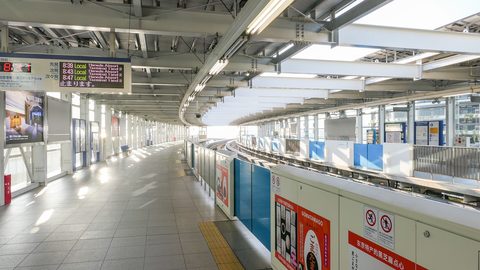 Narita or Haneda for Tokyo and What That Airport Choice Costs You
Narita or Haneda for Tokyo: compare door-to-district time, transfer cost, and what the wrong airport choice eats from your trip.
Narita or Haneda for Tokyo and What That Airport Choice Costs You
Narita or Haneda for Tokyo: compare door-to-district time, transfer cost, and what the wrong airport choice eats from your trip.
-
 Things to Do in Tokyo That Are Worth Your Limited Days
A curated list of Tokyo's highest-impact sights and experiences, from immersive art to quiet backstreets, to help you prioritise your days.
Things to Do in Tokyo That Are Worth Your Limited Days
A curated list of Tokyo's highest-impact sights and experiences, from immersive art to quiet backstreets, to help you prioritise your days.
-
 Best Time to Visit Tokyo Month by Month Tradeoffs
A month-by-month guide to visiting Tokyo, laying out the trade-off between weather, crowds, price, and what's actually open.
Best Time to Visit Tokyo Month by Month Tradeoffs
A month-by-month guide to visiting Tokyo, laying out the trade-off between weather, crowds, price, and what's actually open.
-
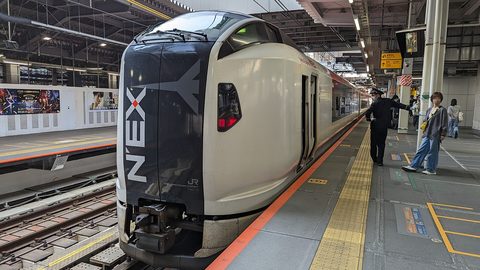 Getting Around Tokyo by Train Airport Transfers and IC Cards
A practical guide to Tokyo's rail network, covering airport transfers, IC cards, and how to avoid the station navigation mistakes that eat your day.
Getting Around Tokyo by Train Airport Transfers and IC Cards
A practical guide to Tokyo's rail network, covering airport transfers, IC cards, and how to avoid the station navigation mistakes that eat your day.
-
 Senso-ji
 is free and never closes, but the experience at 6am with empty Nakamise stalls is nothing like the 11am crush under Kaminarimon. Here is when to go and what you get at each hour.
Senso-ji
Senso-ji is free and never closes, but the experience at 6am with empty Nakamise stalls is nothing like the 11am crush under Kaminarimon. Here is when to go and what you get at each hour.
-
 Meiji Jingu
The Meiji Jingu visit changes completely depending on which torii gate you enter. One drops you from Harajuku noise into sudden forest, the other builds quiet slowly from Yoyogi.
Meiji Jingu
The Meiji Jingu visit changes completely depending on which torii gate you enter. One drops you from Harajuku noise into sudden forest, the other builds quiet slowly from Yoyogi.
-
 teamLab
 Borderless and Planets are two different Tokyo venues with separate booking systems. Borderless tickets at Azabudai Hills sell in timed slots and the maze has no fixed route.
teamLab
teamLab Borderless and Planets are two different Tokyo venues with separate booking systems. Borderless tickets at Azabudai Hills sell in timed slots and the maze has no fixed route.