What Is Actually Open at Haneda Airport in the Middle of the Night
What is Actually Open at Haneda Airport in the Middle of the Night
You land at Haneda at 2am after a 12-hour flight. The terminal is dim. The only other passengers look as disoriented as you. You need food, a shower, and a flat surface before the first train at 5am. Haneda markets itself as a 24-hour airport. The reality at 3am is a handful of convenience stores, one open restaurant if you are lucky, and a scramble for the few shower rooms and nap chairs before they fill. This page gives an honest terminal-by-terminal walkthrough of what is actually open, where to find a quiet bench, and how long to budget for immigration and baggage at different arrival times.
How Arrival Timing Changes Your Options
Your first variable is how fast you clear immigration and customs. At off-peak hours (between 22:00 and 06:00), total processing runs 20 to 40 minutes. During peak immigration windows (06:00 to 08:00, 12:00 to 14:00, and 17:00 to 20:00), budget 45 to 90 minutes from touchdown to the arrivals lobby. A flight landing at 23:00 puts you landside by midnight with most facilities still open. A flight landing at 02:00 means you hit the deepest dead zone.
Customs processing adds 5 to 15 minutes after baggage claim. Use the Visit Japan Web QR code at immigration and customs for faster processing. The paper form works but takes longer. Once you exit into the arrivals lobby, you cannot return airside until the gates reopen around 04:30 to 05:00. Everything you do until the first shuttle bus at 05:00 happens in the public areas.
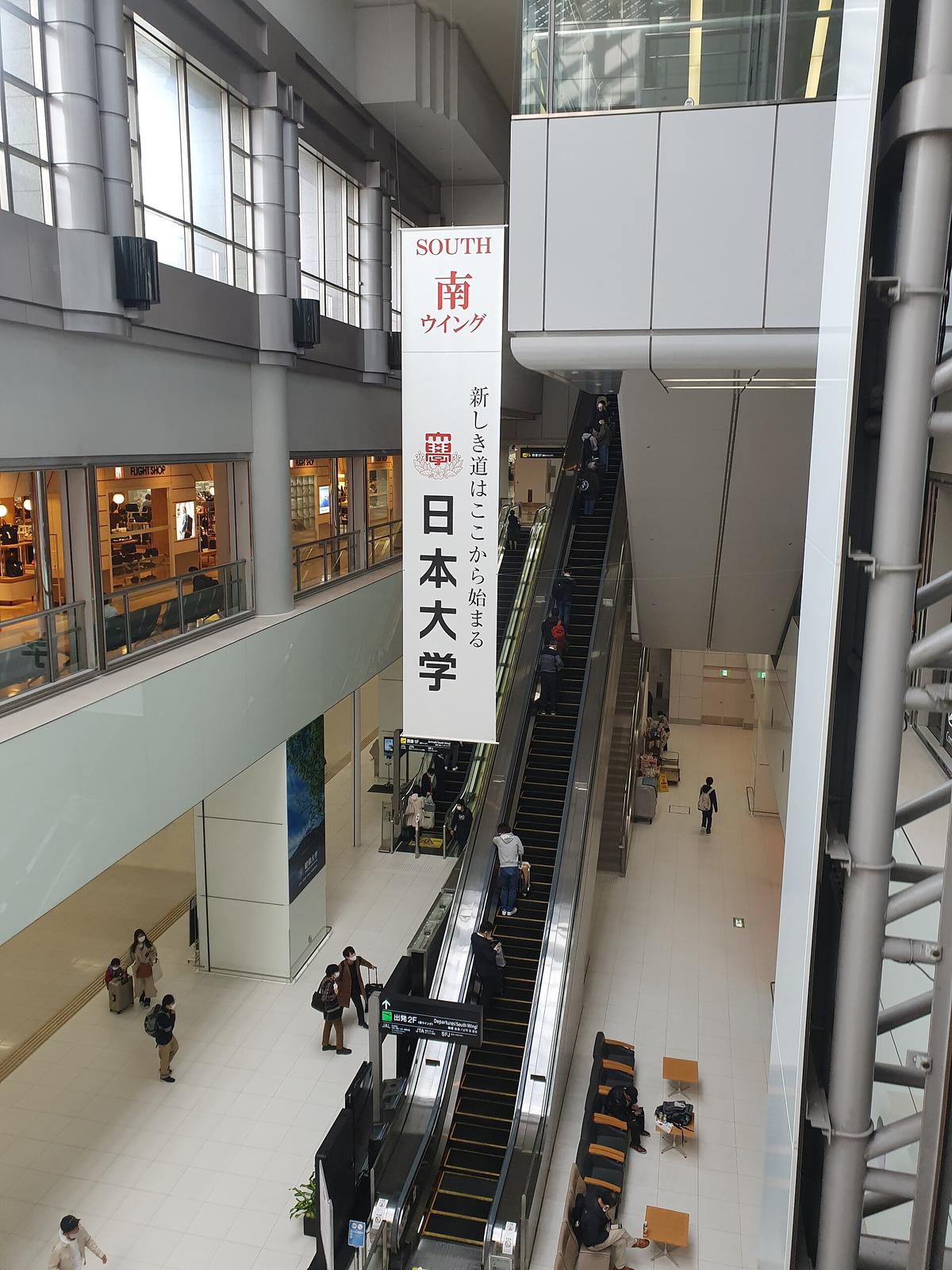

Terminal 3: Your Best Bet for Overnight Survival
Terminal 3 handles all international flights. It is also the only terminal with 24-hour shower rooms, a 24-hour left luggage desk, and the widest public seating area. If you are arriving on an international flight, you stay here. If you are connecting domestically, the first shuttle bus runs at 05:00, so you wait in Terminal 3 until then.
Showers, Lockers, and Luggage
The Shower Room on 2F Arrivals Lobby is open 24 hours. It costs ¥1,030 per 30 minutes, and that includes a towel and basic amenities. It fills up fast after late evening arrivals. Land and head straight there. Do not stop at the convenience store first. The 24-hour left luggage desk on 2F Arrivals Lobby charges ¥520 to ¥820 per item per day. Drop your bag even if you plan to sleep on a bench. It saves you dragging a suitcase around while you hunt for a seat.
Where to Sleep
The best benches are near the 2F arrivals lobby and the seating around Edo Market. The chairs on 3F departure floor are less comfortable but usually quieter. Security may check your boarding pass, especially if you are sleeping near the departure gates. Keep your passport and boarding pass in an accessible pocket. There are no designated rest zones and no blankets. Bring a travel pillow and eye mask from the plane.
Food and Drink
From midnight to 05:00, your options are the 24-hour convenience stores (FamilyMart and Lawson on 2F). Hot food is limited to onigiri, instant noodles, and packaged sandwiches. The restaurants in Edo Market close by 21:00. Buy food before 23:00 if your flight lands late. The 7-Eleven ATMs on 2F accept international cards 24 hours. Withdraw cash here. Many small eateries in Tokyo are cash only.
Terminals 1 and 2: Domestic Arrivals with Fewer Amenities
Terminal 1 serves JAL, Skymark, and StarFlyer domestic flights. Terminal 2 serves ANA, Air Do, and Solaseed Air. Both terminals have public seating areas open overnight, but the services are more limited. The shower rooms in both terminals operate only from 06:00 to 23:00. Arrive in Terminal 1 or 2 after midnight and you cannot shower until morning. The left luggage desks in both terminals also close at 23:00. Coin lockers (small ¥300 to ¥400, medium ¥500 to ¥600, large ¥700 to ¥800 per 24 hours) are available landside and airside. They accept payment for up to seven days.
Benches near the 1F arrivals lobby in both terminals are the main sleeping spots. Terminal 1 also has seating near Market Place. Terminal 2 has seating near the shops. Both areas are well lit and can be cold. The shuttle bus between terminals runs from 05:00 to 24:00. Arrive after midnight and need a shower in Terminal 3? You cannot take the bus. You can walk between Terminal 1 and Terminal 2 via the underground walkway (5 to 10 minutes). There is no public walkway to Terminal 3. The Keikyu Line train connects Terminal 3 to Terminals 1 and 2, but the first train departs around 05:00.
| Facility | Terminal 1 | Terminal 2 | Terminal 3 |
|---|---|---|---|
| Shower room | 06:00 to 23:00, ¥1,030/30 min | 06:00 to 23:00, ¥1,030/30 min | 24 hours, ¥1,030/30 min |
| Left luggage desk | 06:00 to 23:00, ¥520 to ¥820/day | 06:00 to 23:00, ¥520 to ¥820/day | 24 hours, ¥520 to ¥820/day |
| Coin lockers | Landside and airside | Landside and airside | Landside and airside |
| 24-hour convenience store | Yes | Yes | Yes |
| Pay-per-use lounge (landside) | POWER LOUNGE CENTRAL, 3F, ¥1,200/2 hr | None | SKY LOUNGE, 4F, ¥1,200/2 hr |
| Pay-per-use lounge (airside) | POWER LOUNGE NORTH, ¥1,200/2 hr | POWER LOUNGE SOUTH, ¥1,200/2 hr | TIAT Lounge, 4F, ¥1,200/2 hr; SKY LOUNGE SOUTH, ¥1,200/2 hr |
Pay-Per-Use Lounges: Worth it for a Chair and a Shower
If you have a few hours to kill and need a proper seat with power outlets, the pay-per-use lounges are a solid option. All lounges charge ¥1,200 per two hours. The only landside lounge open overnight is SKY LOUNGE in Terminal 3 on 4F. It has reclining chairs, soft drinks, and showers. The airside lounges (POWER LOUNGE NORTH in Terminal 1, POWER LOUNGE SOUTH in Terminal 2, TIAT Lounge and SKY LOUNGE SOUTH in Terminal 3) require a boarding pass and are only accessible during operating hours. They open around 05:00. Do not buy a lounge access pass in advance unless you are certain it will be open when you arrive. Check the lounge operating hours on the airport website before you travel.
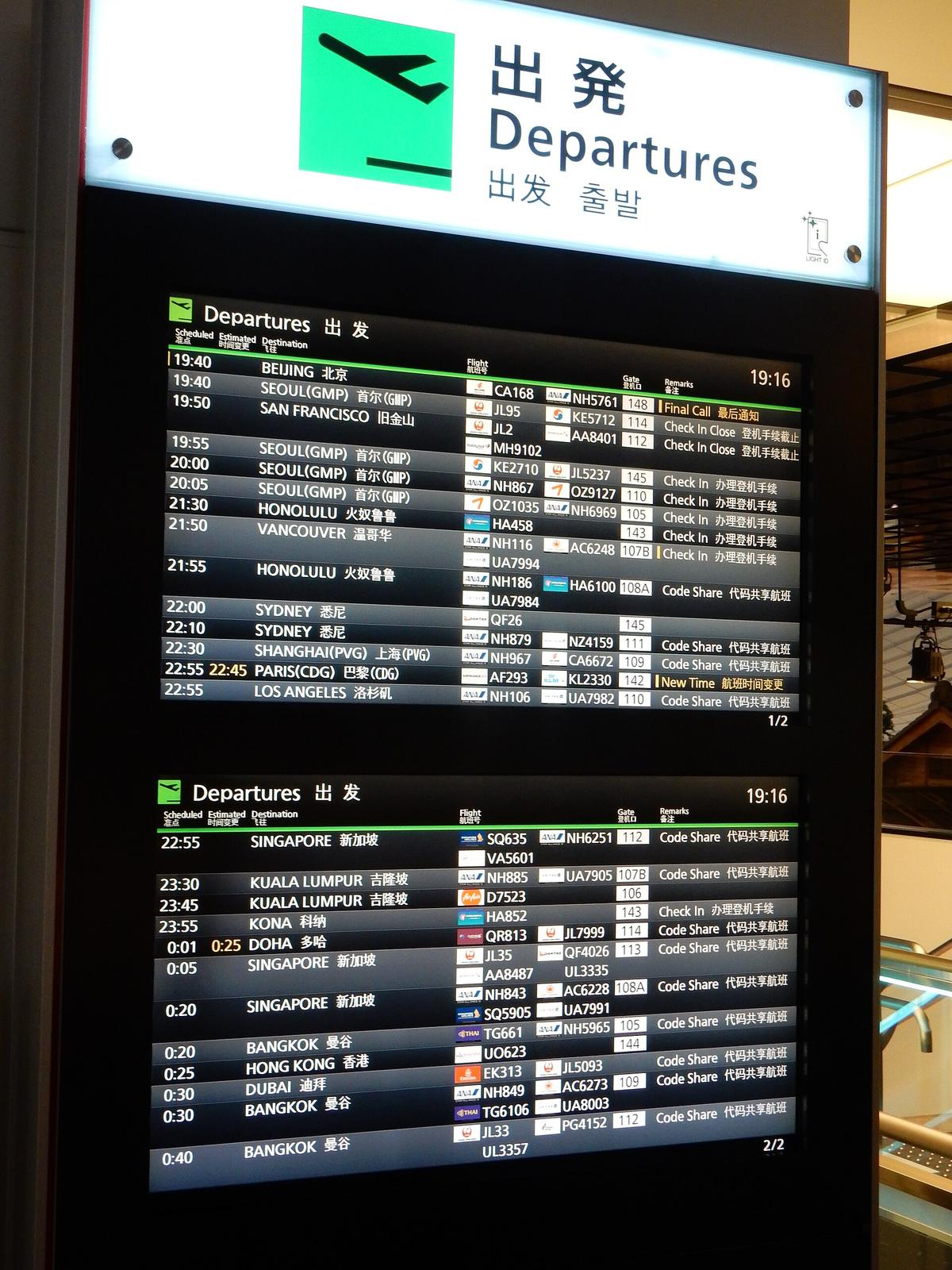
_(34432949583).jpg)
Getting Out of the Airport at First Light
The first trains leave Haneda around 05:00. The Tokyo Monorail runs to Hamamatsucho in 13 to 20 minutes for ¥520. The Keikyu Line runs to Shinagawa in 11 minutes for ¥330. Both lines connect to the Yamanote Line, which loops through Shinjuku, Shibuya, and Tokyo Station. The first Monorail train departs from Terminal 3 at 05:18. The first Keikyu Line train departs at 05:00. Buy a Suica or PASMO IC card at the ticket machines near the station entrances. A card costs ¥2,000 (¥500 deposit plus ¥1,500 balance). If you have an iPhone, add a digital Suica to your Apple Wallet. Non Japanese Android phones usually cannot do this. The IC card works on all trains, subways, and buses in Tokyo, and at convenience stores and vending machines.
Taxis are available 24 hours but cost ¥15,000 to ¥30,000 to central Tokyo. Do not take a taxi unless you are splitting with three other people or you have no other option. The first buses to Shinjuku and Shibuya also start around 05:00.
The Single Thing That Most Often Goes Wrong
Passengers who arrive between midnight and 05:00 assume they can walk between terminals landside. You cannot walk from Terminal 3 to Terminals 1 and 2 without crossing a road that has no pedestrian path. The shuttle bus stops running at midnight. The train does not start until 05:00. Land in Terminal 3 and need a facility in Terminal 1 or 2? You are stuck until morning. The reverse is also true. Choose your terminal based on what is open when you arrive. For international arrivals, Terminal 3 is the only terminal with 24-hour showers and left luggage. Do not wander to the other terminals expecting the same.
Read next
-
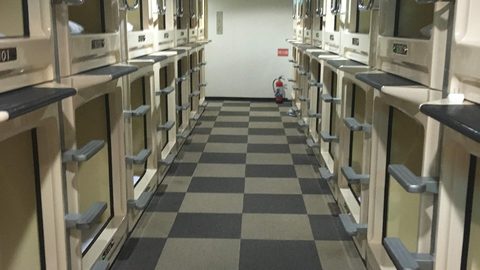
 Tokyo Hotels by Type and Budget from Capsules to Luxury
Tokyo hotels organised by type and price band, from efficient capsule pods to full-service luxury towers, to help you book the right room.
Tokyo Hotels by Type and Budget from Capsules to Luxury
Tokyo hotels organised by type and price band, from efficient capsule pods to full-service luxury towers, to help you book the right room.
-
 Where to Stay in Tokyo by District and Travel Style
A comparison of Tokyo's major districts to help you choose the right base for your travel style, whether you want calm or chaos.
Where to Stay in Tokyo by District and Travel Style
A comparison of Tokyo's major districts to help you choose the right base for your travel style, whether you want calm or chaos.
-
 Narita or Haneda for Tokyo and What That Airport Choice Costs You
Narita or Haneda for Tokyo: compare door-to-district time, transfer cost, and what the wrong airport choice eats from your trip.
Narita or Haneda for Tokyo and What That Airport Choice Costs You
Narita or Haneda for Tokyo: compare door-to-district time, transfer cost, and what the wrong airport choice eats from your trip.
-
 Things to Do in Tokyo That Are Worth Your Limited Days
A curated list of Tokyo's highest-impact sights and experiences, from immersive art to quiet backstreets, to help you prioritise your days.
Things to Do in Tokyo That Are Worth Your Limited Days
A curated list of Tokyo's highest-impact sights and experiences, from immersive art to quiet backstreets, to help you prioritise your days.
-
 Best Time to Visit Tokyo Month by Month Tradeoffs
A month-by-month guide to visiting Tokyo, laying out the trade-off between weather, crowds, price, and what's actually open.
Best Time to Visit Tokyo Month by Month Tradeoffs
A month-by-month guide to visiting Tokyo, laying out the trade-off between weather, crowds, price, and what's actually open.
-
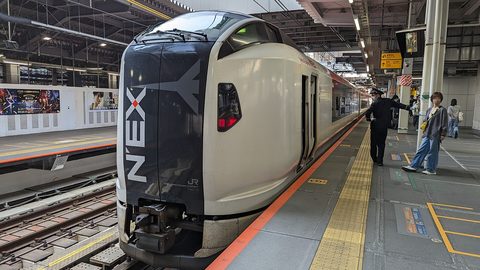 Getting Around Tokyo by Train Airport Transfers and IC Cards
A practical guide to Tokyo's rail network, covering airport transfers, IC cards, and how to avoid the station navigation mistakes that eat your day.
Getting Around Tokyo by Train Airport Transfers and IC Cards
A practical guide to Tokyo's rail network, covering airport transfers, IC cards, and how to avoid the station navigation mistakes that eat your day.
-
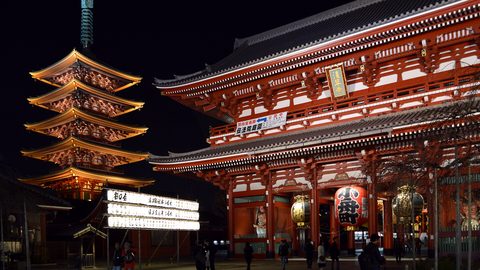 Senso-ji
 is free and never closes, but the experience at 6am with empty Nakamise stalls is nothing like the 11am crush under Kaminarimon. Here is when to go and what you get at each hour.
Senso-ji
Senso-ji is free and never closes, but the experience at 6am with empty Nakamise stalls is nothing like the 11am crush under Kaminarimon. Here is when to go and what you get at each hour.
-
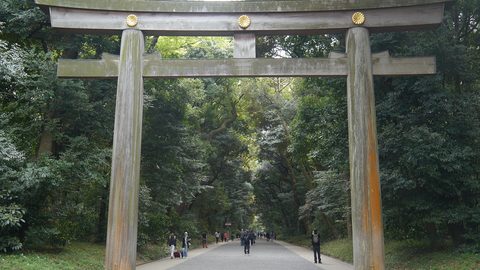 Meiji Jingu
The Meiji Jingu visit changes completely depending on which torii gate you enter. One drops you from Harajuku noise into sudden forest, the other builds quiet slowly from Yoyogi.
Meiji Jingu
The Meiji Jingu visit changes completely depending on which torii gate you enter. One drops you from Harajuku noise into sudden forest, the other builds quiet slowly from Yoyogi.
-
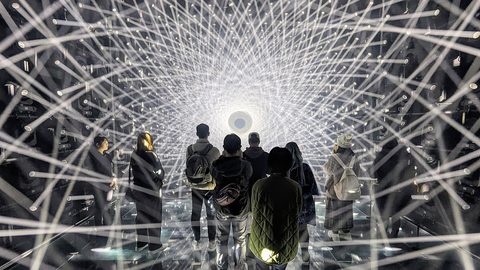 teamLab
 Borderless and Planets are two different Tokyo venues with separate booking systems. Borderless tickets at Azabudai Hills sell in timed slots and the maze has no fixed route.
teamLab
teamLab Borderless and Planets are two different Tokyo venues with separate booking systems. Borderless tickets at Azabudai Hills sell in timed slots and the maze has no fixed route.