Beijing Shopping Without the Souvenir Trap
The Beijing purchases that survive the flight home and the specific markets where locals actually buy them, not the tourist stalls.
Beijing Shopping Without the Souvenir Trap
You are standing on Wangfujing snack street, a stick of fried scorpion in your hand, surrounded by a thousand other tourists doing the same thing. The shops sell the same cloisonne vases, the same jade pendants, the same panda keychains that will sit in a drawer for ten years before you throw them out. This is not shopping. This is a trap laid for people who didn't do their research.
Beijing has real, specific things to buy. Tea aged for two decades. Brushes handmade from weasel hair that cost more than your plane ticket. Ceramics that a Beijing courtyard family has been firing since the Ming dynasty. You just need to know where to go and what to pay. The city's markets operate on an unwritten code of pricing, authenticity, and ritual that looks confusing but is actually straightforward once you learn three rules: pick your market for the category, arrive early, and never pay the first price.
The markets themselves are not interchangeable. You do not buy tea at Silk Street. You do not buy antiques at the Pearl Market. And you absolutely do not buy calligraphy brushes at a souvenir stall on Nanluoguxiang. Each market has a specialty, a price range, and a distinct level of friction. Here is the breakdown.

Tea from Maliandao, Not from a Gift Shop
Take a taxi to Maliandao Tea Market in Xicheng District. This is a multi-block district of wholesale tea sellers, not a single building. Whole shops are dedicated to one region, one varietal, sometimes one single mountain. You can taste before you buy. You should taste before you buy. A good vendor will brew you a cup, talk you through the harvest year, and tell you why his pu-erh is worth more than the identical-looking cake two doors down.
What to Expect When You Bargain
Bargaining is expected here, but the ratio is gentler than at Silk Street. Expect to settle at 50 to 70 percent of the initial asking price. The real risk is mislabeled pu-erh age and origin. A cake stamped "2005 Bulang Mountain" may be three years old. Buy from a vendor who lets you inspect the compressed cake, smell it, and brew a sample. If they refuse, walk.
Choosing Your Tea
For green tea, drink Longjing from Zhejiang or Biluochun from Jiangsu. For oolong, look for Tieguanyin in sealed foil packs. For pu-erh, buy a raw (sheng) cake if you plan to age it yourself, or a ripe (shou) cake if you want to drink it now. Commercially packaged tea for personal use passes through customs without a permit, but check your destination country's limit.
Calligraphy Supplies from Liulichang, Not a Souvenir Stall
Liulichang Cultural Street runs for a few hundred metres in Xicheng and has been the address for fine writing instruments since the Qing dynasty. The shops here sell brushes made from wolf, goat, or weasel hair, ink sticks ground by hand, ink stones that cost more than a month's rent, and rice paper that feels like silk. This is not a place for souvenirs. This is a place for people who actually write Chinese characters.
Prices and Fakes
Bargaining is possible in smaller shops but uncommon in the established galleries where prices are fixed. Expect to pay 60 to 80 percent of the asking price if you negotiate. The counterfeit risk is moderate: paintings and calligraphy attributed to named artists like Qi Baishi or Zhang Daqian are frequently fake. If you cannot authenticate a work yourself, buy an ink stone or a set of brushes instead. They are harder to forge and more satisfying to own.
Liulichang also sells used and antique books, stone seals carved to order, and rubbings from temple steles. The atmosphere is quiet. The shops close at 18:00, so go early in the day.
Ceramics from Panjiayuan on Weekend Mornings, Not the Tourist Kiosks
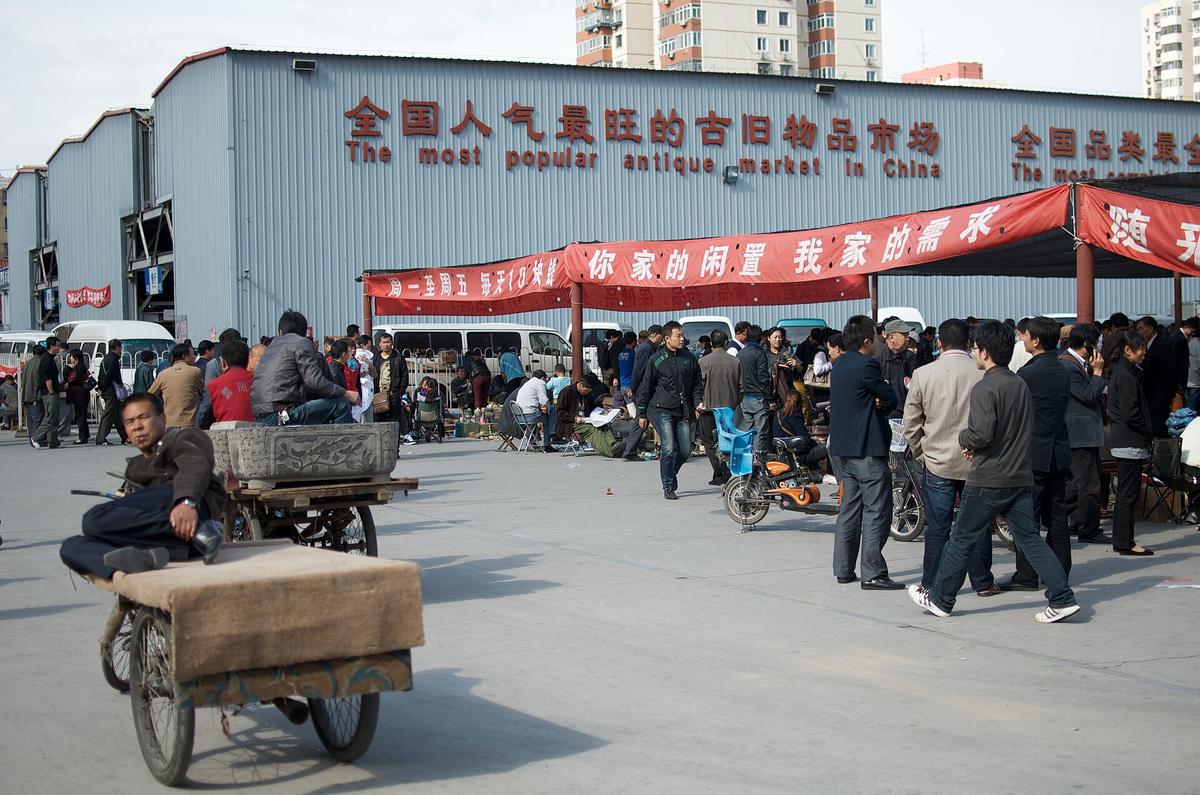
Panjiayuan Antique Market is the largest outdoor antiques market in China, and it is a different place entirely on a Saturday or Sunday. On weekdays it opens at 08:30 and the selection is thinner. On weekends the gate opens at 04:30. Yes, 04:30. Go at 06:00 when the serious dealers are still unpacking and the light is good for examining glazes. By 10:00 it is a slow-moving crowd of bodies and you cannot see the goods properly.
Bargaining and Reproductions
Bargaining here is aggressive and expected. Settle at 30 to 50 percent of the initial asking price. That jade seal the vendor said was Qing dynasty? It is a resin casting made last month. The bronze mirror with a green patina? Machine-etched and buried in fertilizer for a week. Almost everything described as "antique" is a reproduction. Buy it anyway if you like the shape, the glaze, or the feel. Pay reproduction prices. The vendors assume you know this and price accordingly.
What to Buy and What to Skip
What is worth buying here: Song dynasty inspired celadon bowls, Cultural Revolution propaganda posters, old brass locks, hand-carved wooden panels from dismantled buildings, and beads. Skip the jade unless you know jade. Skip the calligraphy scrolls. The good buys are the things that cost 50 to 200 yuan and have no backstory attached to them.

Silk Street and Hongqiao Pearl Market: Where You Go for Specific Items
Silk Street Market in Chaoyang is the place for tailored clothing, cashmere scarves, and silk robes. You can get a suit made in 48 hours if you bring a photo of the cut you want. Bargain hard: settle at 10 to 30 percent of the first price. The counterfeit risk for branded watches, handbags, and electronics is high. If you want a fake Rolex or a knockoff Louis Vuitton bag, this is where you buy it. If you want something authentic, stick to the unlabeled silk items and cashmere throws.
Pearls and Electronics
Hongqiao Pearl Market sits next to the Temple of Heaven and dominates the pearl trade in Beijing. Freshwater pearls from Zhuji are the best value. Saltwater akoya and South Sea pearls are available but pricier. Bargain to 20 to 40 percent of the opening price. The counterfeit risk is high for branded watches and electronics. Buy the pearls, skip the electronics. The second floor has electronics stalls selling headphones and phone cases that are almost certainly counterfeit.
One more thing: Wangfujing Street is fine for browsing Chinese brands and mainstream department stores. Do not buy souvenirs there. Nanluoguxiang is for designer trinkets and postcards. Do not buy anything expensive there. The counterfeit risk is low at both, but the markups are high and the selection is generic.
The Reality of Buying Things in Beijing
Most of what is sold as "antique" in Beijing markets is a reproduction. Accept this before you arrive and you will have a better time. The ceramics are unglazed in a factory in Jingdezhen, the jade is pulverized stone set in resin, the calligraphy scrolls are printed on aged paper. You can still buy them. Just pay reproduction prices and enjoy the object for what it is: a well-made copy of something beautiful.
How to Bargain
Bargaining is not a battle. It is a conversation. The vendor opens high. You counter low. You meet in the middle. The ratios in this guide are accurate for each market. Read them before you go. And bring cash for the markets. WeChat Pay and Alipay dominate Beijing, but some Panjiayuan stalls prefer cash in small denominations, especially early on weekends when the phone networks are slow.
This shopping strategy suits the traveller who wants depth over volume, who would rather own one good tea set than ten bad souvenirs, who is willing to wake up at dawn for a transaction that takes patience. It does not suit anyone in a hurry, anyone who wants a quick gift for the office, or anyone who dislikes haggling. For those people, Wangfujing snack street is waiting. The scorpion sticks are cold by now anyway.
Frequently Asked Questions
Can I take antique ceramics home through customs?
Antiques from before 1911 require export approval from the State Administration of Cultural Heritage. Items dated 1911 to 1949 need a relic export permit if classified as cultural relics. Most things sold at Panjiayuan are reproductions and will pass without paperwork. When in doubt, ask the seller for an export certificate.
How much should I pay for a tea cake at Maliandao?
Expect to settle at 50 to 70 percent of the opening price. A decent young pu-erh cake should cost 100 to 300 yuan. Aged cakes from reputable producers run 500 to 2000 yuan. If a 2005 cake costs 150 yuan, it is not from 2005.
Is it worth going to Panjiayuan on a weekday?
No. The weekend morning market draws the best dealers with the widest selection. Weekdays have fewer vendors and thinner inventory. If Saturday at 06:00 sounds brutal, skip Panjiayuan entirely and buy ceramics at Liulichang instead.
What if I cannot bargain in Chinese?
Use a calculator on your phone. Type your offer, show the screen, and smile. The vendor will type back their counteroffer. This works at every market in Beijing. Learn the numbers in Mandarin anyway. It lowers the price by 10 percent.
Read next
-
 Beijing Hotels by Price Band and Property Type
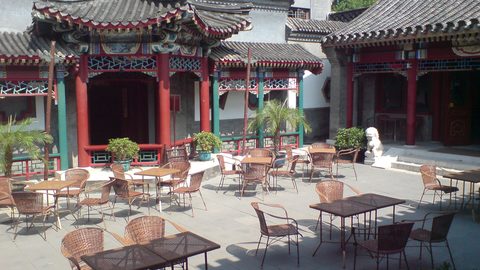
Beijing hotels split into hutong courtyards, international chains and functional business towers. Here is what each price band actually buys you.
Beijing Hotels by Price Band and Property Type
Beijing hotels split into hutong courtyards, international chains and functional business towers. Here is what each price band actually buys you.
-
 Where to Stay in Beijing by District and Travel Style
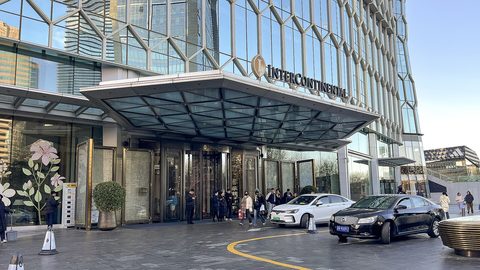
Dongcheng puts you beside the Forbidden City, Chaoyang beside the nightlife. Here is how Beijing's districts compare for different travellers.
Where to Stay in Beijing by District and Travel Style
Dongcheng puts you beside the Forbidden City, Chaoyang beside the nightlife. Here is how Beijing's districts compare for different travellers.
-
 Beijing Flights PEK vs PKX Which Airport Actually Works for You
PEK or PKX? What each Beijing airport costs you in time, money, and logistical friction depending on where you are staying.
Beijing Flights PEK vs PKX Which Airport Actually Works for You
PEK or PKX? What each Beijing airport costs you in time, money, and logistical friction depending on where you are staying.
-
 Beijing Things to Do Worth Your Limited Days
The Forbidden City and Great Wall are essential, but Beijing's meaning lives in temple courtyards, hutong lanes and food streets. Here is what earns your days.
Beijing Things to Do Worth Your Limited Days
The Forbidden City and Great Wall are essential, but Beijing's meaning lives in temple courtyards, hutong lanes and food streets. Here is what earns your days.
-
 Best Time to Visit Beijing, Month by Month Tradeoffs
April and October bring blue skies and queues, July brings heat, January brings empty sites and hazardous air. Here is Beijing month by month.
Best Time to Visit Beijing, Month by Month Tradeoffs
April and October bring blue skies and queues, July brings heat, January brings empty sites and hazardous air. Here is Beijing month by month.
-
 Getting Around Beijing Without Losing Half Your Day
Beijing's metro is clean and cheap but stops early, and taxis rarely speak English. Here is how to move around without burning half your day.
Getting Around Beijing Without Losing Half Your Day
Beijing's metro is clean and cheap but stops early, and taxis rarely speak English. Here is how to move around without burning half your day.
-
 Forbidden City
 tickets require booking seven days ahead on WeChat with a passport. Here is the route to take once you are inside to avoid wasting the visit.
Forbidden City
Forbidden City tickets require booking seven days ahead on WeChat with a passport. Here is the route to take once you are inside to avoid wasting the visit.
-
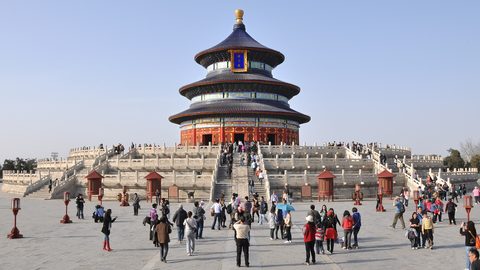 Temple of Heaven
The Temple of Heaven park matters as much as the temple. Morning tai chi, choirs, and card players make it a Beijing ritual worth a full morning.
Temple of Heaven
The Temple of Heaven park matters as much as the temple. Morning tai chi, choirs, and card players make it a Beijing ritual worth a full morning.
-
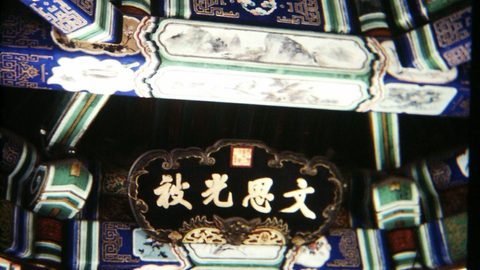 Summer Palace
The Summer Palace is vast and the wrong entrance adds an hour of walking. Use the East Palace Gate and plan for at least four hours.
Summer Palace
The Summer Palace is vast and the wrong entrance adds an hour of walking. Use the East Palace Gate and plan for at least four hours.