Choosing a Beijing Base That Matches Your Trip
Dongcheng puts you beside the Forbidden City, Chaoyang beside the nightlife. Here is how Beijing's districts compare for different travellers.
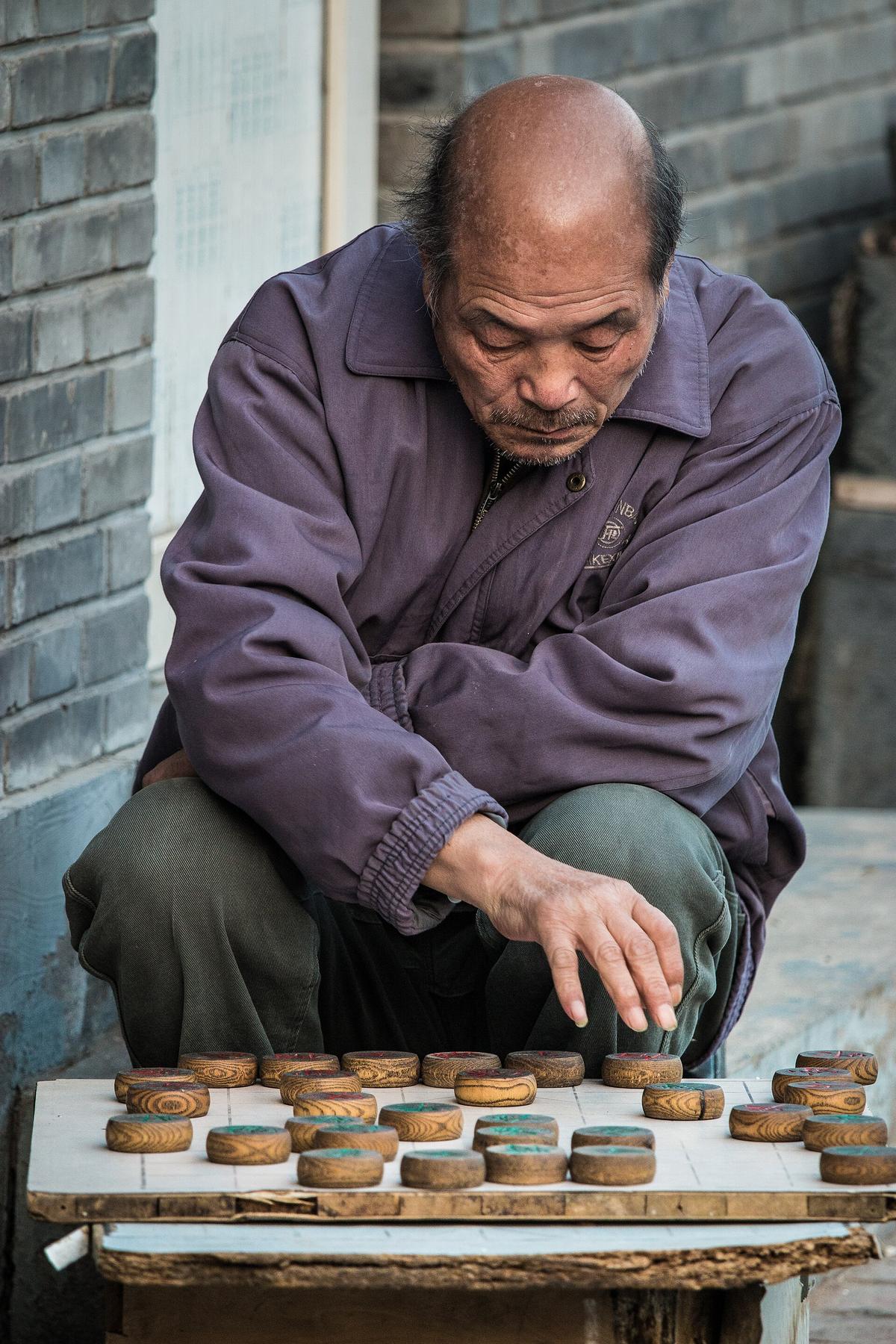
Dongcheng puts you inside the moat of the Forbidden City but charges that proximity in crowd density you will feel in your chest by midday. Chaoyang gives you international coffee chains and a metro ride to every sight you actually came to see. Xicheng holds the older Beijing, the lakeside quiet, the hutongs where old men play xiangqi on folding stools. Haidian exists for one reason: the Summer Palace, and nothing else. There is no perfect district. There is only the district whose downsides you are willing to accept.
Dongcheng: You Pay for Centre with Your Sanity
The Imperial Core and Its Crowds
This is imperial core. The Forbidden City, Jingshan Park, the Drum and Bell Towers, the Lama Temple, the Confucius Temple, Tiananmen Square. They are all here. You walk out of your hotel and into the thick of it. That sounds ideal until you try to move. Dongcheng has the highest tourist density in Beijing. The hutongs around Nanluoguxiang are so packed on weekends you shuffle single file between selfie sticks. Book the Forbidden City seven days ahead on the WeChat mini program. Passport required. You cannot queue up on the day and walk in.
What You Eat and When
The upside is real depth. Eat at a hutong hole-in-the-wall zhajiangmian shop that has served the same dish for thirty years. Uighur chuanr vendors set up after 10pm and the lamb skewers are cumin-heavy, charred, cheap. Jianbing carts vanish by 9am so wake early or miss it. You trade comfort for access.
The Daily Friction
Everything is crowded. The metro station at Dongdan fills at rush hour. Taxi drivers refuse short fares around the sightseeing loop. You will walk more than you expect because a "nearby" sight can be a thirty minute march across a ten lane road.
.jpg)
Chaoyang: the Expat Bubble with a Distance Problem
What Chaoyang Offers
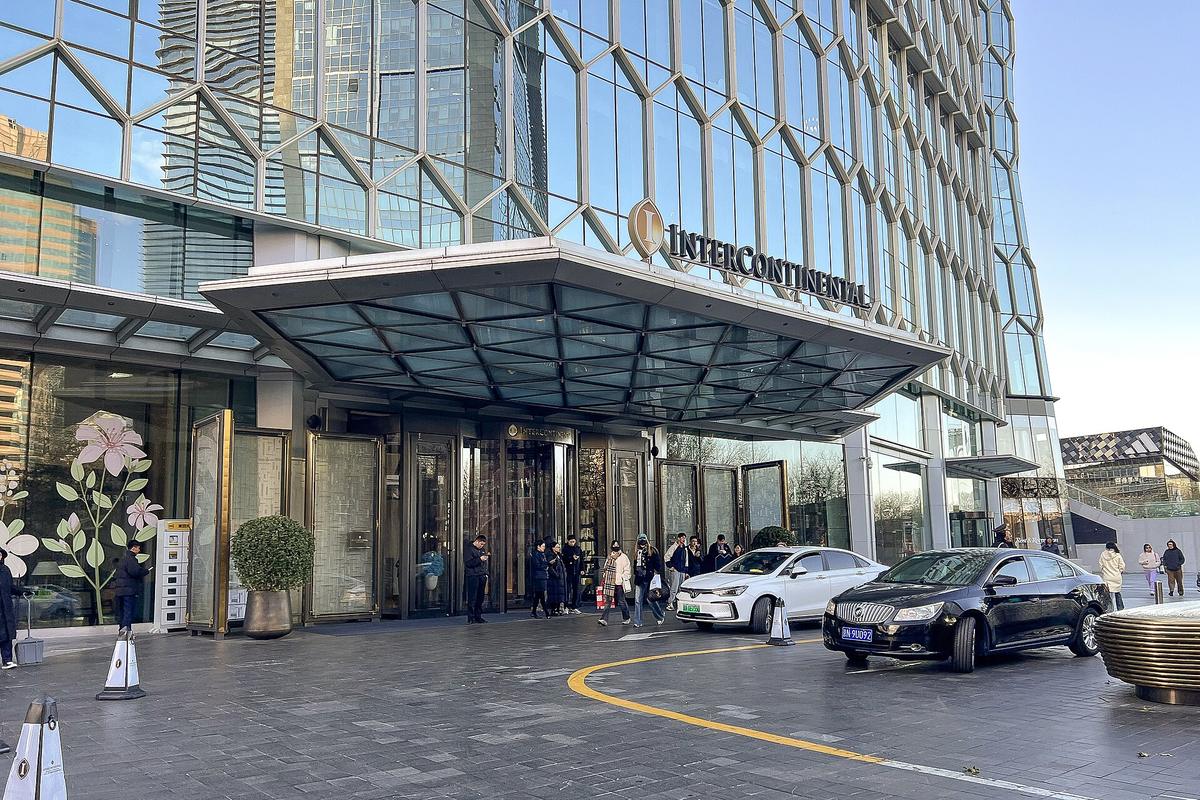
Chaoyang has the nightlife, the embassy compounds, the 798 Art District in a Bauhaus factory complex, the CCTV Headquarters that looks like a giant wonky donut. Sanlitun is where you find craft beer and brunch and conversations in English. The metro runs clean and extensive. The trade is obvious: you are not central. Ride the subway for twenty five minutes to reach the Forbidden City. Ride it again to get to the Temple of Heaven. Distances between sights are vast in Beijing, and Chaoyang adds to that.
The Metro Trap
Station transfers on the metro involve ten to fifteen minute underground walks. The metro stops around 22:30 to 23:00. If you are out in Sanlitun past that, you pay for a taxi.
Who Should Stay Here
Chaoyang suits repeat visitors. You have already seen the imperial sights. You want a base with a proper coffee shop, a gym that does not double as a storage closet, a restaurant where the staff speaks English. First-time Asia travellers find it isolating. The Beijing you flew to is not the Beijing of hutongs and incense at the Lama Temple. It is the Beijing of office towers and luxury malls. That is not a mistake. It is a preference. Know yours.
Xicheng: the Quiet That Costs Convenience
The Older Beijing
Xicheng sits west of the Forbidden City. Beihai Park, Houhai lakes, the older residue of Beijing that feels less staged than Dongcheng. You get the Capital Museum here, which is the less crowded alternative to the National Museum. Eat at Fangshan Restaurant inside Beihai Park for recreated Qing dynasty banquet dishes. Walk the lakeside without bumping shoulders with tour groups. The downside: you are trading proximity to the biggest sights for calm. The Forbidden City is still reachable but you add a twenty minute walk or a short metro ride. The hutongs in Xicheng are genuine. Old men play chess. Laundry hangs on wires. There is no curated night market. Come here when you want older Beijing without the performance.
What to Carry and How to Pay
Public toilets in this district are squat style with no soap or toilet paper. Carry both. Cash is nearly useless. WeChat Pay or Alipay are expected and foreign cards fail unpredictably even where accepted. Get a transport card or set up the Alipay transport QR code before you leave your hotel.
Haidian: for Summer Palace Only
Haidian is where the universities, the tech campuses, the Summer Palace sit. The palace grounds are vast, imperial, a lakeside escape. Book ahead. After you see it, Haidian offers zero nightlife. Zero spontaneous wandering. You are in a district built for students and engineers. Stay here only if your entire Beijing trip revolves around the Summer Palace or you have business at a campus. Otherwise the extra metro time to reach Dongcheng sights will frustrate you by day two.
The other districts do not merit your consideration for a first trip. Shijingshan is residential. Fengtai is sprawl around Beijing West Railway Station. Tongzhou is under construction as the new municipal government zone, far east. Yanqing is mountainous for the Great Wall sections and the 2022 Winter Olympics zone, but do not base there unless you are hiking Jinshanling for two days straight. Minimum four full days in Beijing. Any less and you are ticking the Forbidden City and the Great Wall while missing the neighbourhoods that give the city its meaning.
The Brutal Logistics of Choosing Wrong
Scale Will Break Your Itinerary
Beijing operates on a scale that exhausts even prepared travellers. Distances between sights are vast. The grid layout means endless walking. A day that starts at the Forbidden City and finishes at the Summer Palace requires two hours of metro time and a walk budget you did not account for. The common mistake is trying to do the Forbidden City and Tiananmen Square in the same morning as the Great Wall. The Forbidden City alone takes three to four hours. The nearest Great Wall section is 1.5 hours away. The only way that works is if you photograph both from the entrance and leave. Do not do it.
When to Go and When to Stay Away
Peak season runs April to May and September to October for tolerable temperatures and blue skies. The first week of October brings National Day, crushing domestic tourism to every major site. Avoid it. Chinese New Year falls in late January or February. Millions leave but millions arrive for temple fairs. Many restaurants close. The city feels both packed and shut. Summer July to August hits 35 degrees plus with humidity and queues that can run two hours. Winter travellers who can handle biting cold get empty sites. That is the real play if you have the jacket for it.
Arrival and Getting Around
Arrival via Beijing Capital Airport: take the Airport Express train to Dongzhimen. It takes 25 minutes and costs ¥25, then transfer to metro or taxi. A taxi from PEK to central Beijing runs roughly ¥100 to ¥150 and 45 to 70 minutes without traffic. From Daxing Airport, take the Daxing Airport Express to Caoqiao. It takes 20 minutes at ¥35, then metro or taxi. A Daxing taxi runs roughly ¥200 and 60 minutes plus. The metro is your backbone. Clean, extensive, signage in English, ¥3 to ¥9 per ride. Get a transport card or the Alipay transport QR code. Single-ticket machine queues are long. The metro stops running around 22:30 to 23:00 depending on line. Plan your last ride or accept the taxi cost.
.jpg)
Who Should Book This City and Who Should Skip it
Beijing is for history obsessives who want depth over charm. Food travellers willing to chase specific dishes across the city. Solo travellers comfortable with logistical friction. Repeat China visitors ready for the mega-city experience. Winter travellers who handle bitter cold for empty sites. It is not for first-time Asia travellers seeking a gentle introduction. Not for people who need green space and spontaneity on demand. Not for travellers on tight budgets who still want central accommodation. Not for anyone expecting old China without concrete and flyovers.
What You Actually Need to Know Before Choosing
- Dongcheng puts you in imperial core with constant crowd density. Accept that the queues and noise are the price of walking distance to the Forbidden City.
- Chaoyang gives you expat infrastructure and nightlife but attaches a real metro ride to every major sight. You trade speed for comfort.
- Xicheng offers older Beijing residue and lakeside calm. You gain quiet. You lose proximity to the headline attractions.
- Haidian is only for the Summer Palace and nothing else. Stay elsewhere for a balanced trip.
- Every recommendation carries a stated downside. A recommendation without a downside is an advert.
Your Next Move
Decide which district's downside you can live with. Then go to the Beijing hotels page and pick a property inside that district. The specific hotel matters less than the neighbourhood. Get the neighbourhood wrong and no hotel room will fix it.
Common Questions
Which Beijing district is best for a first time visitor who wants to see the main sights?
Dongcheng. The Forbidden City, Jingshan Park, Tiananmen Square, the Lama Temple, the Drum and Bell Towers are all there or a short walk. The cost is constant crowd density and noise. Accept that and Dongcheng is your base.
Is Chaoyang worth the distance from the imperial sights?
Only if you value nightlife, international restaurants, and a base that feels less touristy. Every major sight requires a 20 to 30 minute metro ride. If you are out past 23:00 you pay for a taxi.
How many days do I need in Beijing to see it properly?
Four full days minimum. Any less and you are only ticking the Forbidden City and the Great Wall while missing the neighbourhoods that give the city its meaning.
What is the worst time of year to visit Beijing?
The first week of October for National Day. Crushing domestic tourism at every major site. Also Chinese New Year when many restaurants close but temple fairs still pack the city. Summer July to August with 35 degree heat and two hour queues.
Can I stay in Haidian and still see central Beijing easily?
Technically yes, but you add a significant metro ride to every sight outside the Summer Palace. Haidian has zero nightlife and zero spontaneous wandering. Stay there only if the Summer Palace is your primary destination.
Read next
-
 Beijing Hotels by Price Band and Property Type
Beijing hotels split into hutong courtyards, international chains and functional business towers. Here is what each price band actually buys you.
Beijing Hotels by Price Band and Property Type
Beijing hotels split into hutong courtyards, international chains and functional business towers. Here is what each price band actually buys you.
-
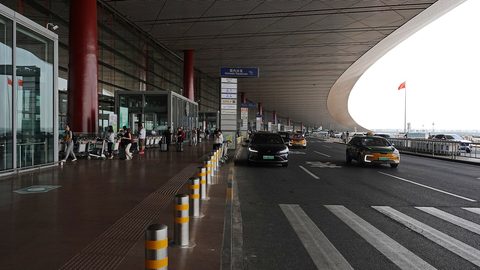 Beijing Flights PEK vs PKX Which Airport Actually Works for You
PEK or PKX? What each Beijing airport costs you in time, money, and logistical friction depending on where you are staying.
Beijing Flights PEK vs PKX Which Airport Actually Works for You
PEK or PKX? What each Beijing airport costs you in time, money, and logistical friction depending on where you are staying.
-
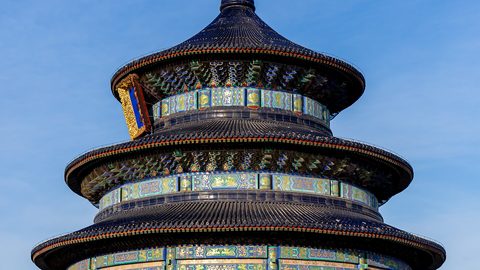 Beijing Things to Do Worth Your Limited Days
The Forbidden City and Great Wall are essential, but Beijing's meaning lives in temple courtyards, hutong lanes and food streets. Here is what earns your days.
Beijing Things to Do Worth Your Limited Days
The Forbidden City and Great Wall are essential, but Beijing's meaning lives in temple courtyards, hutong lanes and food streets. Here is what earns your days.
-
 Best Time to Visit Beijing, Month by Month Tradeoffs
April and October bring blue skies and queues, July brings heat, January brings empty sites and hazardous air. Here is Beijing month by month.
Best Time to Visit Beijing, Month by Month Tradeoffs
April and October bring blue skies and queues, July brings heat, January brings empty sites and hazardous air. Here is Beijing month by month.
-
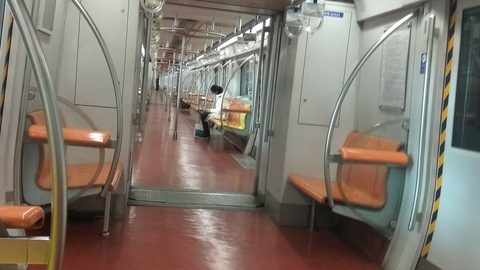 Getting Around Beijing Without Losing Half Your Day
Beijing's metro is clean and cheap but stops early, and taxis rarely speak English. Here is how to move around without burning half your day.
Getting Around Beijing Without Losing Half Your Day
Beijing's metro is clean and cheap but stops early, and taxis rarely speak English. Here is how to move around without burning half your day.
-
 A 4 Day Beijing Itinerary That Leaves Things Out
Four days in Beijing, ordered by geography so you are not crossing the city twice. This itinerary leaves out famous sights on purpose.
A 4 Day Beijing Itinerary That Leaves Things Out
Four days in Beijing, ordered by geography so you are not crossing the city twice. This itinerary leaves out famous sights on purpose.
-
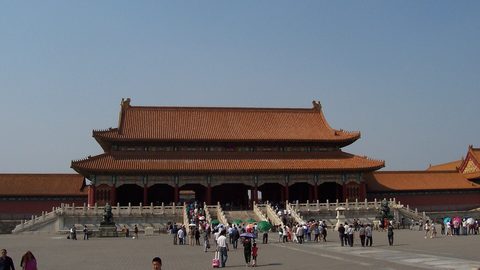 Forbidden City
 tickets require booking seven days ahead on WeChat with a passport. Here is the route to take once you are inside to avoid wasting the visit.
Forbidden City
Forbidden City tickets require booking seven days ahead on WeChat with a passport. Here is the route to take once you are inside to avoid wasting the visit.
-
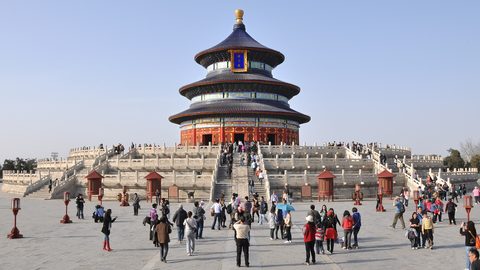 Temple of Heaven
The Temple of Heaven park matters as much as the temple. Morning tai chi, choirs, and card players make it a Beijing ritual worth a full morning.
Temple of Heaven
The Temple of Heaven park matters as much as the temple. Morning tai chi, choirs, and card players make it a Beijing ritual worth a full morning.
-
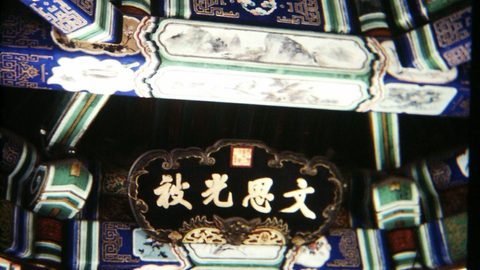 Summer Palace
The Summer Palace is vast and the wrong entrance adds an hour of walking. Use the East Palace Gate and plan for at least four hours.
Summer Palace
The Summer Palace is vast and the wrong entrance adds an hour of walking. Use the East Palace Gate and plan for at least four hours.