How to Do the Beijing to Tianjin High-Speed Rail Hop
The complete guide to the 30-minute high-speed train from Beijing South to Tianjin, including tickets, station navigation, and what to see there.
The 30-Minute Escape You Probably Think You Know
Most travellers assume a day trip to Tianjin is just a scaled-down version of Beijing, a second city with fewer sights and weaker food. That assumption is wrong. Tianjin feels like a European treaty port that got dropped into northern China by accident. Its concession-era architecture, wide boulevards lined with Italianate villas and French mansions, and a street food culture that rivals anything in the capital make it not a consolation prize but a genuine counterpoint. And the journey from Beijing South to Tianjin takes exactly 30 minutes on the high-speed train, with departures every 15 to 30 minutes. You can leave when you want, stay as long as you like, and be back in Beijing for dinner.
Getting to Beijing South
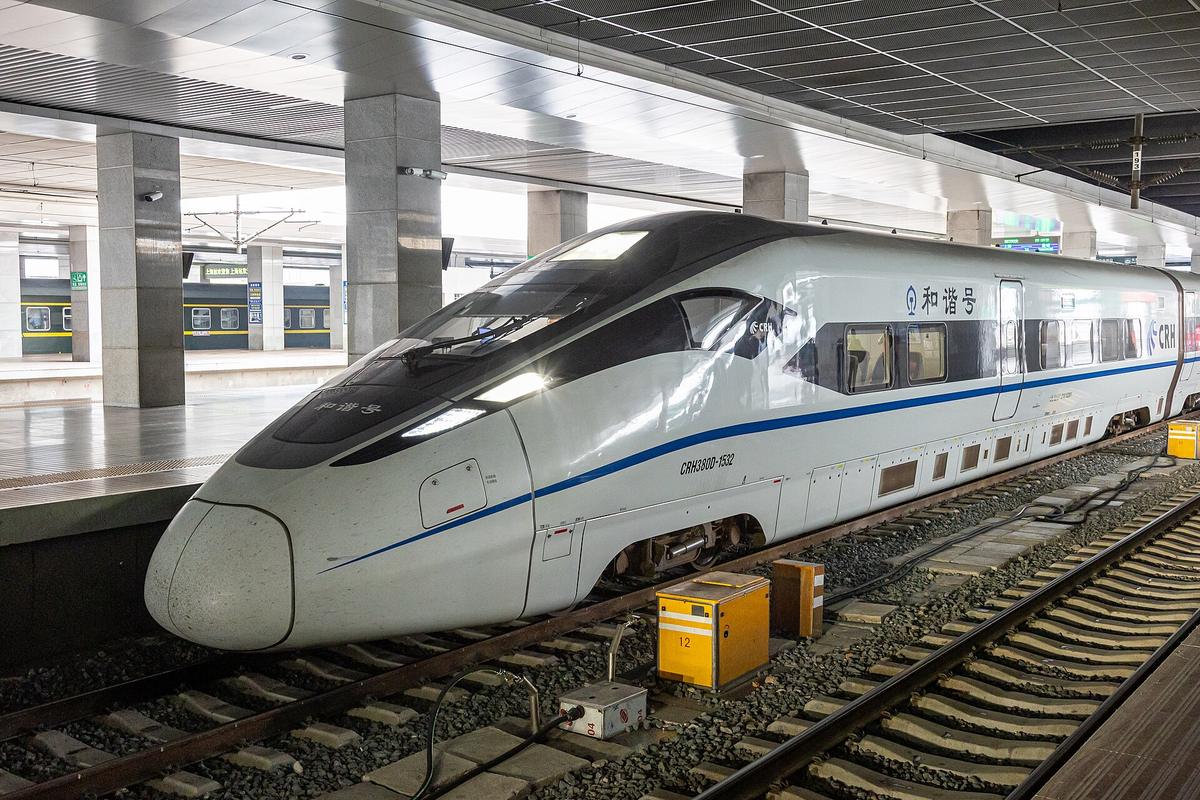
Start at Beijing South. The easiest metro access is Line 4 or Line 14, both of which stop directly there. From Dongcheng or Xicheng, Line 4 is your fastest bet. From Chaoyang, take Line 14. The terminal is one of those vast Chinese transit sheds where the scale disorients you for the first five minutes. Do not panic. Enter at the main hall, the enormous glass-roofed space on the upper level. Look up at the departure board. It shows train numbers, departure times, platform numbers, and the final destination. Every train on this route says Tianjin. If the board says Tianjin, you are on the right track. The frequency means you never need to rush for a specific departure. Miss one, wait 15 minutes, take the next.
.jpg)
Navigating Security and the Gate Procedure
Security check is straightforward. Put your bag on the scanner belt, walk through the metal detector, collect your bag. No need to remove laptops or liquids. The line moves fast. After security, you enter the waiting hall. Find your gate number on the departure board and head to that waiting area. Gates are clearly numbered in English and Chinese. About 10 minutes before departure, the gate opens and you walk down the escalator to the platform. The train will be sitting there. Find your carriage number printed on the side of the train and on the platform floor. Board, stow your luggage overhead, sit down. It is that simple.
Seats, Speed, and the Ride
Second class seats cost roughly ¥55 and are perfectly comfortable for 30 minutes. Two seats on each side of the aisle, decent legroom, a fold-down tray, and a power socket between the seats. First class costs roughly ¥95 and gives you wider seats in a 2+2 configuration, more legroom, and a complimentary bottle of water. For a half-hour ride, second class is fine. Save the upgrade for longer journeys. The train accelerates smoothly, reaches full speed, and before you have finished checking your phone, the conductor announces Tianjin.
Arriving at Tianjin Station: What to Expect
Into the Old City
Tianjin Station drops you right in the centre of the old city. Exit the terminal and you are steps from the Hai River and the historic concession districts. The building itself is modern with clear English signage. Follow the exit signs to the main square. Taxis queue outside, but the city is walkable if you plan a focused route. The Italian Concession area is a 15-minute walk along the river. The French Concession is slightly further. Tianjin does not have the Forbidden City or the Great Wall. It has something rarer in China: a preserved European streetscape that feels like a film set for a period drama. Stroll the tree-lined avenues, photograph the neoclassical facades, and eat your way through the street food stalls that cluster around the old market streets.
What to Do on a Day Trip: a Practical Itinerary
Morning: Concessions and Coffee
Start at the Italian Concession, the largest Italian-style neighbourhood outside Italy. Walk the grid of streets named after Italian cities. Grab coffee at a pavement cafe. Then cross the river to the French Concession and the Tianjin Eye, a Ferris wheel built over the bridge. Skip the ride, the view is better from the riverbank.
Afternoon: Street Food and Porcelain
Walk along the Hai River promenade toward Ancient Culture Street, a reconstructed Ming and Qing dynasty shopping lane. It is touristy but worth it for the street food: goubuli baozi (steamed buns), jianbing, and the local fried dough sticks. For lunch, find a xiaochi (small eats) street and order whatever looks good. Tianjin's food scene is more street-level and less formal than Beijing's. In the afternoon, visit the Porcelain House, a bizarre and magnificent mansion covered in ceramic shards. It is strange, beautiful, and completely unlike anything in Beijing. By 5pm, you are ready to walk back to the railway hub. Trains run until late evening, so you can leave at 6pm or 9pm. The flexibility is the point.
The Honest Caveat
Tianjin is not a polished tourist city. Some of its grand buildings are crumbling. The air can be hazy. The street food is gritty and real. That is exactly why it works as a day trip from Beijing. It gives you texture, history, and a physical sense of China's treaty port past that Beijing's imperial monuments cannot provide. Just do not expect it to be easy or clean. Expect it to be interesting.
| Item | Detail |
|---|---|
| Journey time | 30 minutes |
| Frequency | Every 15 to 30 minutes |
| Second class price | Roughly ¥55 |
| First class price | Roughly ¥95 |
| Metro access | Line 4 or Line 14 to Beijing South |
| Arrival station | Tianjin Station, city centre |
| Return flexibility | Trains run until late evening |
Read next
-
 Beijing Hotels by Price Band and Property Type
Beijing hotels split into hutong courtyards, international chains and functional business towers. Here is what each price band actually buys you.
Beijing Hotels by Price Band and Property Type
Beijing hotels split into hutong courtyards, international chains and functional business towers. Here is what each price band actually buys you.
-
 Where to Stay in Beijing by District and Travel Style
Dongcheng puts you beside the Forbidden City, Chaoyang beside the nightlife. Here is how Beijing's districts compare for different travellers.
Where to Stay in Beijing by District and Travel Style
Dongcheng puts you beside the Forbidden City, Chaoyang beside the nightlife. Here is how Beijing's districts compare for different travellers.
-
 Beijing Flights PEK vs PKX Which Airport Actually Works for You
PEK or PKX? What each Beijing airport costs you in time, money, and logistical friction depending on where you are staying.
Beijing Flights PEK vs PKX Which Airport Actually Works for You
PEK or PKX? What each Beijing airport costs you in time, money, and logistical friction depending on where you are staying.
-
 Beijing Things to Do Worth Your Limited Days
The Forbidden City and Great Wall are essential, but Beijing's meaning lives in temple courtyards, hutong lanes and food streets. Here is what earns your days.
Beijing Things to Do Worth Your Limited Days
The Forbidden City and Great Wall are essential, but Beijing's meaning lives in temple courtyards, hutong lanes and food streets. Here is what earns your days.
-
 Best Time to Visit Beijing, Month by Month Tradeoffs
April and October bring blue skies and queues, July brings heat, January brings empty sites and hazardous air. Here is Beijing month by month.
Best Time to Visit Beijing, Month by Month Tradeoffs
April and October bring blue skies and queues, July brings heat, January brings empty sites and hazardous air. Here is Beijing month by month.
-
 Getting Around Beijing Without Losing Half Your Day
Beijing's metro is clean and cheap but stops early, and taxis rarely speak English. Here is how to move around without burning half your day.
Getting Around Beijing Without Losing Half Your Day
Beijing's metro is clean and cheap but stops early, and taxis rarely speak English. Here is how to move around without burning half your day.
-
 Forbidden City
 tickets require booking seven days ahead on WeChat with a passport. Here is the route to take once you are inside to avoid wasting the visit.
Forbidden City
Forbidden City tickets require booking seven days ahead on WeChat with a passport. Here is the route to take once you are inside to avoid wasting the visit.
-
 Temple of Heaven
The Temple of Heaven park matters as much as the temple. Morning tai chi, choirs, and card players make it a Beijing ritual worth a full morning.
Temple of Heaven
The Temple of Heaven park matters as much as the temple. Morning tai chi, choirs, and card players make it a Beijing ritual worth a full morning.
-
 Summer Palace
The Summer Palace is vast and the wrong entrance adds an hour of walking. Use the East Palace Gate and plan for at least four hours.
Summer Palace
The Summer Palace is vast and the wrong entrance adds an hour of walking. Use the East Palace Gate and plan for at least four hours.